

All 60 questions from the IIT JAM 2022 Biotechnology (BT) paper, typed out in full, with the answer key and every diagram: Section A (MCQ), Section B (MSQ) and Section C (numerical answer).
IIT JAM 2022 Biotechnology was organised by IIT Roorkee. The paper has three sections by question type and four subjects: 46 Biology, 5 Chemistry, 5 Physics and 4 Mathematics questions. Every question is below in the order it was set, tagged with its topic. Tap Show answer under any question to check the answer.
Marking scheme
| Section | Questions | Marks each | Wrong answer | Max marks |
|---|---|---|---|---|
| A: MCQ (one correct option) | Q1–30 (10 × 1 mark, 20 × 2 marks) | 1 or 2 | −1/3 or −2/3 | 50 |
| B: MSQ (one or more correct) | Q31–40 | 2 | No negative marking | 20 |
| C: Numerical answer | Q41–60 (10 × 1 mark, 10 × 2 marks) | 1 or 2 | No negative marking | 30 |
| Total | 60 | 100 |
Which topics this paper tested
We tagged every question with its subject and topic. Biology carried 46 of the 60 questions; within it, Microbiology and Genetics had the most. The charts below cover all four subjects.
| Subject | Questions | Marks |
|---|---|---|
| Biology | 46 | 79 |
| Chemistry | 5 | 9 |
| Physics | 5 | 8 |
| Mathematics | 4 | 4 |
| Total | 60 | 100 |
Biology
Chemistry
Physics
Mathematics
Jump to a question
Section A: Multiple choice (one correct option) (Q1–30)
30 questions (10 of 1 mark, 20 of 2 marks). A wrong answer loses 1/3 or 2/3 of the marks.
Which of the following is involved in innate immune response in higher mammals?
- AT cell antigen receptor
- BB cell antigen receptor
- CToll-like receptor
- DMajor histocompatibility complex-II molecule
Show answer
Which among the following belongs to the family “Retroviridae”?
- AHuman Immunodeficiency virus
- BEbola virus
- CDengue virus
- DInfluenza virus
Show answer
Which of the following is a glycolipid?
- ACerebroside
- BPhosphatidylcholine
- CPhosphatidylserine
- DCardiolipin
Show answer
Which of the following bacterial component contains “dipicolinic acid”?
- AEndospore
- BCapsule
- CFlagella
- DPili
Show answer
The fossilization process in which mineral rich water penetrates through the pores of decomposed organic matter is known as _____.
- ACarbonization
- BChemical fossilization
- CPetrifaction
- DMicrofossilization
Show answer
A random fluctuation in gene frequency is called
- AGenetic drift
- BGenetic load
- CPanmixis
- DGenetic shift
Show answer
The number of “Barr Bodies” present in a somatic cell of a woman suffering from Turner syndrome is ____.
- A0
- B1
- C2
- D3
Show answer
Which of the following are produced by Mangrove trees to survive in the waterlogged swampy forests?
- ATrichomes
- BPneumatophores
- CSpermatophores
- DCambia
Show answer
Indeterminate growth in plants is due to the presence of perpetually undifferentiated tissues, called as ______.
- ATracheids
- BMeristems
- CParenchyma
- DSclerenchyma
Show answer
The osmotic potential (ψ) of pure water is _____ MPa.
- A−1
- B0
- C0.1
- D10
Show answer
Bacteria containing a tuft of flagella that comes out from one pole is called ___.
- ALophotrichous
- BPeritrichous
- CMonotrichous
- DAmphitrichous
Show answer
Which of the following activity is associated with Klenow fragment?
- A5′-3′ exonuclease activity
- B5′-3′ endonuclease activity
- CPolymerase activity
- D3′-5′ endonuclease activity
Show answer
A frameshift mutation is caused by ____.
- A5-Bromouracil
- BAcridine
- CGlutathione
- DHypoxanthine
Show answer
The zone of a pond system where respiration is more than production is called as _____.
- ALimnetic zone
- BLittoral zone
- CEpilimnion zone
- DBenthic zone
Show answer
An organism that causes obstruction of lymphatic system in humans is ____.
- ABorrelia burgdorferi
- BBrucella abortus
- CYersinia pestis
- DWuchereria bancrofti
Show answer
A man having a dominant genetic trait (TT genotype) can taste phenylthiocarbamide (PTC), marries a woman who cannot taste PTC. The PTC tasting ability of their biological son and daughter is
- ASon taster; Daughter non-taster
- BDaughter taster; Son non-taster
- CBoth are non-tasters
- DBoth are tasters
Show answer
Which of the following enzymes is absent in a person suffering from Alkaptonuria?
- ATyrosinase
- BHomogentisic acid oxidase
- CCatechol dioxygenase
- DPhenylalanine hydroxylase
Show answer
The bacterium that can tolerate high concentrations of salt and also ferment mannitol is
- AStaphylococcus aureus
- BStaphylococcus epidermis
- CStreptococcus pyogenes
- DSerratia marcescens
Show answer
Match the following
| Group I | Group II |
|---|---|
| P) Streptomycin | 1) Inhibits beta-subunit of RNA polymerase |
| Q) Cycloheximide | 2) Inhibits peptidyl transferase activity of 50S subunit |
| R) Rifamycin | 3) Inhibits peptidyl transferase activity of 60S subunit |
| S) Chloramphenicol | 4) Inhibits binding of formyl methionine tRNA to ribosome |
- AP-1, Q-3, R-4, S-2
- BP-4, Q-3, R-1, S-2
- CP-2, Q-3, R-1, S-4
- DP-3, Q-4, R-1, S-2
Show answer
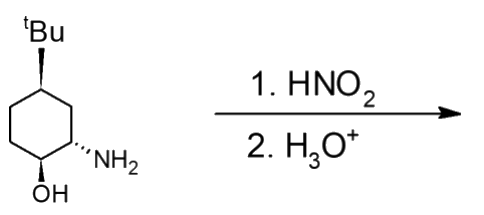
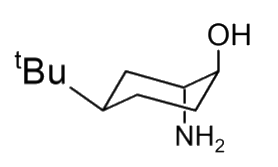
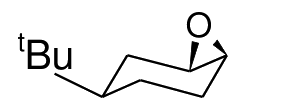
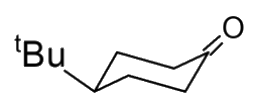
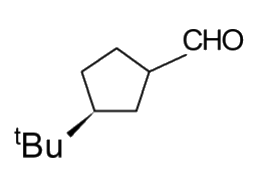
The major product formed in the given reaction is
- A

- B

- C

- D

Show answer
DNA gyrase can
- Acut single-stranded DNA
- Brelax supercoiled DNA
- Cintroduce negative supercoiling in DNA
- Dnot utilize ATP
Show answer
The stationary phase of cation-exchange chromatography can be
- ADEAE-cellulose
- BCM-cellulose
- CSephadex G-50
- DHeparin-Sepharose
Show answer
Components of a Transmission Electron Microscope are
- AElectron gun, objective lens, positron beam, projector lens
- BNeutron beam, projector lens, objective lens, evacuated tube
- CElectron beam, projector lens, objective lens, condenser lens
- DX-ray beam, projector lens, objective lens, condenser lens
Show answer
In a honey bee population, the workers are infertile but protect the queen from intruders and help in reproduction. This is an example of
- AK selection
- BSexual selection
- CKin selection
- DDisruptive selection
Show answer
For an enzyme following Michaelis-Menten kinetics, when [S] = KM then, the velocity v is
([S] is substrate concentration, KM is Michaelis constant, Vmax is maximal velocity)
- A[S] × Vmax
- B0.75 × Vmax
- C0.5 × Vmax
- DKM × Vmax
Show answer
The net equation for aerobic glycolysis is
- AGlucose + 2ATP → 2 lactate + 2ADP + 2Pi
- BGlucose + 2ADP + 2Pi + 2NAD+ → 2 pyruvate + 2ATP + 2NADH + 2H2O + 4H+
- CGlucose + 2ADP + 2Pi → 2 pyruvate + 2ATP + 2H2O
- DGlucose + 2ADP + 2Pi + 2NAD+ → 2 lactate + 2ATP + 2NADH + 2H2O + 4H+
Show answer
In the electron transport chain, flavin mononucleotide (FMN) can adopt ______ as the highest oxidation state and is capable of accepting or donating _____ electrons, respectively.
- A2; 2 or 3
- B2; 1 or 2
- C3; 2 or 3
- D3; 1 or 2
Show answer
In bacteria, the σ factor that plays a major role in transcription during the stationary phase is
- Aσ70
- Bσ54
- Cσ28
- Dσ32
Show answer
A rise in cytosolic calcium ion concentration just after fertilization in a sea urchin egg leads to
- AFormation of fertilization envelope
- BAcrosomal reaction
- CFormation of vegetal pole
- DFormation of animal pole
Show answer
In a nephron, _____ follows the ascending limb of the “loop of Henle”.
- ADescending limb
- BDistal tubule
- CCollecting tubule
- DProximal tubule
Show answer
Section B: Multiple select (one or more correct) (Q31–40)
10 questions, 2 marks each. No negative marking.
Transpirational pull that extends down to the roots in plants can be interrupted by
- AProcess of cavitation
- BProcess of gravitation
- CFormation of water vapor pockets
- DPositive pressure in xylem sap
Show answer
Transfer of plasmids into animal cells can be achieved by
- AElectroporation
- BLiposome-mediated process
- CCalcium chloride treatment
- DSucrose treatment
Show answer
Archaeal cell membranes contain lipids that are
- AEther linked
- BEster linked
- CBranched alkyl chain
- DLinear alkyl chain
Show answer
Which of the following are producers in an ecological system?
- AMacrophytes
- BPhytoplanktons
- CZooplanktons
- DCyanobacteria
Show answer
Which of the following acts as wound hormones in plants?
- AEthylene
- BCytokinins
- CAbscisic acid
- DDextrin
Show answer
The enriched media used to facilitate the growth of fastidious microorganisms are
- ASelenite F broth
- BBlood agar
- CChocolate agar
- DLoeffler’s serum
Show answer
Match the bacterial structure to function
| (i) Cell wall | (a) Virulence factor |
| (ii) Glycocalyx | (b) Selective permeability |
| (c) Attachment to surfaces | |
| (d) Protection from osmotic lysis |
- A(i)-(b), (ii)-(d)
- B(i)-(d), (ii)-(a)
- C(i)-(c), (ii)-(b)
- D(i)-(d), (ii)-(c)
Show answer
Identify the correct pairs:
| (i) Thermophile | (a) grows optimal at 37 °C |
| (ii) Mesophile | (b) grows optimal at low temperature |
| (iii) Psychrophile | (c) grows optimal at high saline conditions |
| (iv) Halophile | (d) grows optimal at 67 °C |
- A(i)-(d)
- B(ii)-(b)
- C(iii)-(a)
- D(iv)-(c)
Show answer
A single copy of an allele in sickle-cell heterozygous individuals reduces the frequency and severity of malaria. The reason for this is
- ALow oxygen binding capacity of hemoglobin
- BSingle amino acid substitution in hemoglobin deforms the red blood cells
- CAbnormal hemoglobin is toxic for malaria parasite
- DMalaria parasite escapes the deformed red blood cells
Show answer
The correct statement/s for bimolecular nucleophilic substitution reactions is/are
- AIt goes through a carbocation formation
- BThere is an inversion of configuration if the reacting center is chiral
- CReaction is enhanced when carried out in polar solvents
- DThe reaction intermediate is trigonal bipyramidal
Show answer
Section C: Numerical answer (Q41–60)
20 questions (10 of 1 mark, 10 of 2 marks). No negative marking.
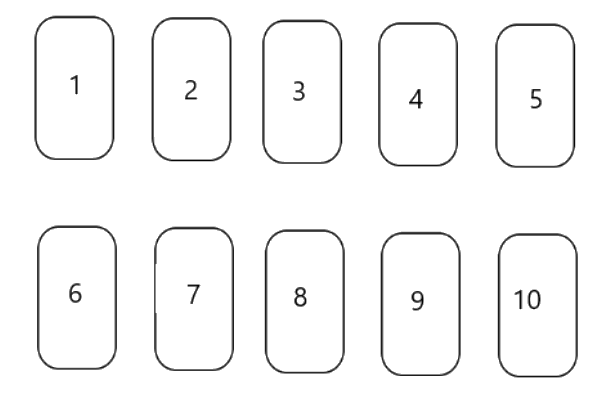
A deck of ten cards is given to you as shown below in the figure. One card is drawn at random from this deck. The probability of selecting a number less than 9 is ____. (to one decimal place)
Type a number as your answer.
Show answer
The average of all positive even integers less than or equal to 40 is ___.
Type a number as your answer.
Show answer
The smallest positive (non-zero) integer “n” for which the expression ((1 + i)/(1 − i))n = 1 holds true, is ___.
Type a number as your answer.
Show answer
Given that
A = (sinθ cosθ tanθ + sinθ cosθ cotθ), the value of A is
Type a number as your answer.
Show answer
An object is placed at the principal focus of a concave lens of focal length 10 cm. The image will be formed at _____ cm, between the optical center and the focus of the lens on the same side of the object.
Type a number as your answer.
Show answer
What is the maximum number of hydrogen bonds that a water molecule can make in the liquid state?
Type a number as your answer.
Show answer
How many pairs of autosomal chromosomes are there in normal humans?
Type a number as your answer.
Show answer
Calculate the temperature (in K) at which the resistance of a metal becomes 20% more than its resistance at 300 K. The value of the temperature coefficient of resistance for this metal is 2.0 × 10⁻⁴ /K.
Type a number as your answer.
Show answer
In the 1H NMR spectrum of ethanol at 400 MHz, the methyl group splits into _________ number of peaks.
Type a number as your answer.
Show answer
In a denaturing polyacrylamide gel electrophoresis experiment, pure intact adult human hemoglobin will yield ________ (number) bands.
Type a number as your answer.
Show answer
A man throws a ball vertically up in the air with an initial velocity v1 such that it reaches a height of 12 m with a speed of 12 m/s. If he throws the same ball vertically up with an initial velocity v2 such that it reaches a maximum height of 12 m. Calculate v1/v2. (up to 2 decimal places)
Type a number as your answer.
Show answer
What is the acceleration due to gravity (m/s2) on the surface of a planet if its radius is 1/4th that of earth and its mass is 1/80th that of earth? Assume that the gravity on the surface of the earth is 10 m/s2.
Type a number as your answer.
Show answer
In a randomly mating population, the frequency of ‘A’ allele is 0.7. What is the frequency of ‘Aa’ genotype in the next generation according to Hardy-Weinberg’s law? (up to two decimal places)
Type a number as your answer.
Show answer
The potential difference to accelerate an electron was quadrupled. By what factor does the de Broglie wavelength of the electron beam change?
Type a number as your answer.
Show answer
A 500 nm light is used for imaging in a confocal microscope. What will be the best resolution (in nm) of this microscope?
Type a number as your answer.
Show answer
Assuming the molecule shown below is aromatic, the value of “n” according to “Hückel’s rule” is

Type a number as your answer.
Show answer
In an actively growing population from a single bacterium, 1,048,576 cells are present after 20th generation. How many cells were there in 5th generation?
Type a number as your answer.
Show answer
A double stranded DNA molecule of total 5000 base pairs long, has a melting temperature of 85 °C. What will be the % AT base pairs in this sample? (up to one decimal place).
Type a number as your answer.
Show answer
How many GTP molecules are required for the translocation of tRNA from P site to E site during translation elongation process in bacteria?
Type a number as your answer.
Show answer
Amongst the molecules given below, the total number of molecules that have at least one sp2 hybridized atom is __________.
C6H6, NO2, BF3, H2O2, SO2, C2H2, L-Tryptophan
Type a number as your answer.
Show answer
Changes in the answer key
Marks to all: Q26, Q28. More than one answer accepted: Q40, Q45, Q54. Every other question has the single answer shown.
How to revise from this paper
- Attempt it in one 3-hour sittingAll 60 questions are compulsory, as in the real exam. Check answers only at the end.
- Score it the JAM wayAdd 1 or 2 marks per correct answer and subtract 1/3 or 2/3 only for wrong MCQs. MSQ must be fully correct to score.
- Sort your mistakes by topicUse the topic tag on each question. Two or three misses in the same topic show where to revise first.
- Repeat with another yearTake a different year a week later and compare your topic-wise mistakes.
Keep going