

All 122 questions from the GATE 2023 Life Sciences (XL) paper, typed out in full, with the official final answer key and every diagram: General Aptitude, Chemistry and all five optional sections.
GATE 2023 Life Sciences (XL) was organised by IIT Kanpur. Every candidate answered General Aptitude (GA) and XL-P Chemistry, then chose two of the five optional sections: XL-Q Biochemistry, XL-R Botany, XL-S Microbiology, XL-T Zoology and XL-U Food Technology. This page has all of them, in the order they were set, so you can practise the two you plan to choose and look at the rest. Each question is tagged with its topic. Tap Show answer under any question to check the official answer.
Marking scheme
| Section | Questions | Marks | You answer |
|---|---|---|---|
| GA: General Aptitude | 10 (5 × 1 mark, 5 × 2 marks) | 15 | Compulsory |
| XL-P: Chemistry | 17 (9 × 1 mark, 8 × 2 marks) | 25 | Compulsory |
| XL-Q to XL-U: five optional sections | 19 each (8 × 1 mark, 11 × 2 marks) | 30 each | Any two |
| Total you answer | 65 | 100 | 3 hours |
Which topics this paper tested
We tagged every question with its GATE XL syllabus topic. The table shows the three biggest topics in each section; each section below opens with a chart of all its topics.
| Section | Questions | Most-tested topics (questions) |
|---|---|---|
| GA General Aptitude | 10 | Quantitative Aptitude (4), Verbal Aptitude (3), Spatial Aptitude (2) |
| XL-P Chemistry | 17 | Organic Chemistry (4), Chemical Equilibria (2), Biomolecule Chemistry (2) |
| XL-Q Biochemistry | 19 | Biomolecules (6), Metabolism & Bioenergetics (4), Biochemical Techniques (3) |
| XL-R Botany | 19 | Genetics & Genomics (5), Plant Physiology & Biochemistry (4), Plant Anatomy (3) |
| XL-S Microbiology | 19 | Microbial Growth (4), Microbial Metabolism (3), Prokaryotic Cells (3) |
| XL-T Zoology | 19 | Biochemistry & Molecular Biology (6), Developmental Biology (2), Parasitology & Immunology (2) |
| XL-U Food Technology | 19 | Food Chemistry & Nutrition (10), Food Engineering (5), Food Products Technology (2) |
Jump to a section
GA: General Aptitude (Q1–10)
10 questions (5 of 1 mark, 5 of 2 marks). Compulsory for every XL candidate.
The village was nestled in a green spot, _______ the ocean and the hills.
- Athrough
- Bin
- Cat
- Dbetween
Show answer
Disagree : Protest : : Agree : _______ (By word meaning)
- ARefuse
- BPretext
- CRecommend
- DRefute
Show answer
A ‘frabjous’ number is defined as a 3 digit number with all digits odd, and no two adjacent digits being the same. For example, 137 is a frabjous number, while 133 is not. How many such frabjous numbers exist?
- A125
- B720
- C60
- D80
Show answer
Which one among the following statements must be TRUE about the mean and the median of the scores of all candidates appearing for GATE 2023?
- AThe median is at least as large as the mean.
- BThe mean is at least as large as the median.
- CAt most half the candidates have a score that is larger than the median.
- DAt most half the candidates have a score that is larger than the mean.
Show answer
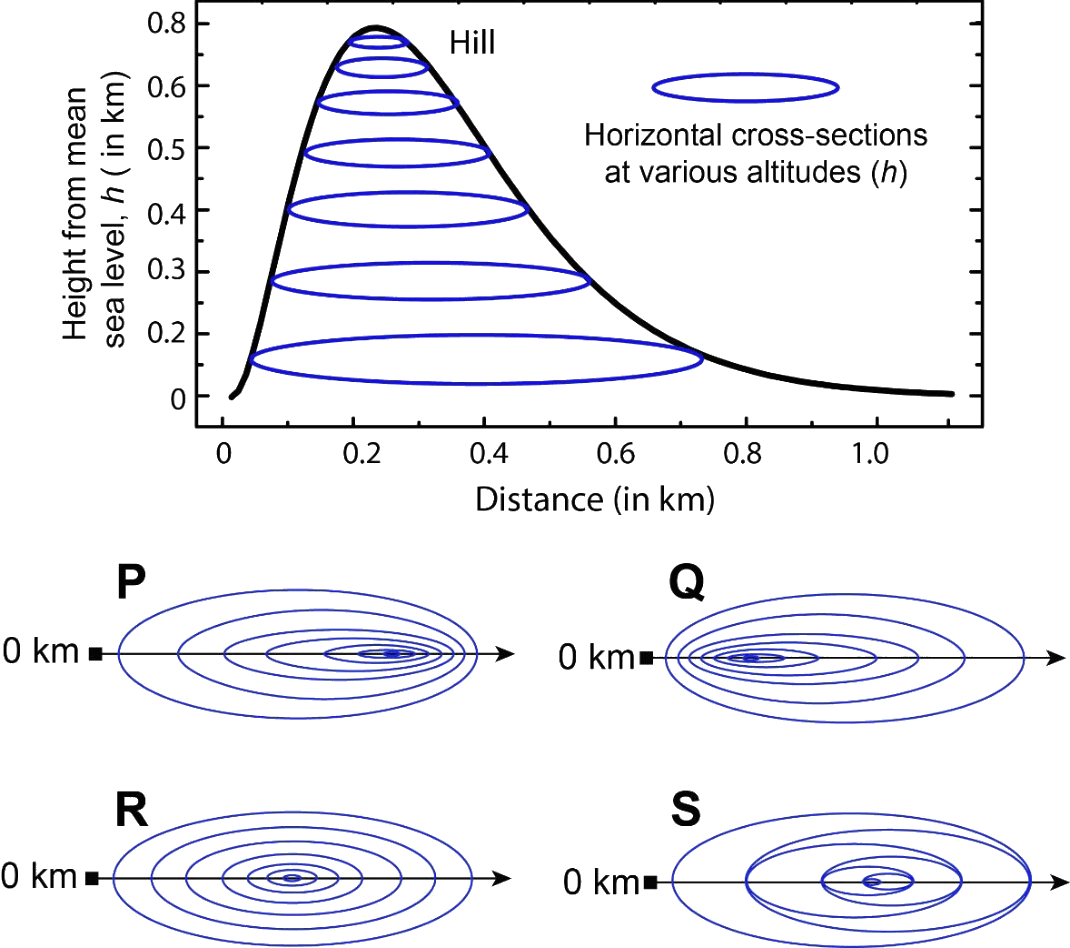
In the given diagram, ovals are marked at different heights (h) of a hill. Which one of the following options P, Q, R, and S depicts the top view of the hill?
- AP
- BQ
- CR
- DS
Show answer
Residency is a famous housing complex with many well-established individuals among its residents. A recent survey conducted among the residents of the complex revealed that all of those residents who are well established in their respective fields happen to be academicians. The survey also revealed that most of these academicians are authors of some best-selling books. Based only on the information provided above, which one of the following statements can be logically inferred with certainty?
- ASome residents of the complex who are well established in their fields are also authors of some best-selling books.
- BAll academicians residing in the complex are well established in their fields.
- CSome authors of best-selling books are residents of the complex who are well established in their fields.
- DSome academicians residing in the complex are well established in their fields.
Show answer
Ankita has to climb 5 stairs starting at the ground, while respecting the following rules:
1. At any stage, Ankita can move either one or two stairs up.
2. At any stage, Ankita cannot move to a lower step.
Let F(N) denote the number of possible ways in which Ankita can reach the Nth stair. For example, F(1) = 1, F(2) = 2, F(3) = 3. The value of F(5) is _______.
- A8
- B7
- C6
- D5
Show answer
The information contained in DNA is used to synthesize proteins that are necessary for the functioning of life. DNA is composed of four nucleotides: Adenine (A), Thymine (T), Cytosine (C), and Guanine (G). The information contained in DNA can then be thought of as a sequence of these four nucleotides: A, T, C, and G. DNA has coding and non-coding regions. Coding regions—where the sequence of these nucleotides are read in groups of three to produce individual amino acids—constitute only about 2% of human DNA. For example, the triplet of nucleotides CCG codes for the amino acid glycine, while the triplet GGA codes for the amino acid proline. Multiple amino acids are then assembled to form a protein. Based only on the information provided above, which of the following statements can be logically inferred with certainty? (i) The majority of human DNA has no role in the synthesis of proteins. (ii) The function of about 98% of human DNA is not understood.
- Aonly (i)
- Bonly (ii)
- Cboth (i) and (ii)
- Dneither (i) nor (ii)
Show answer
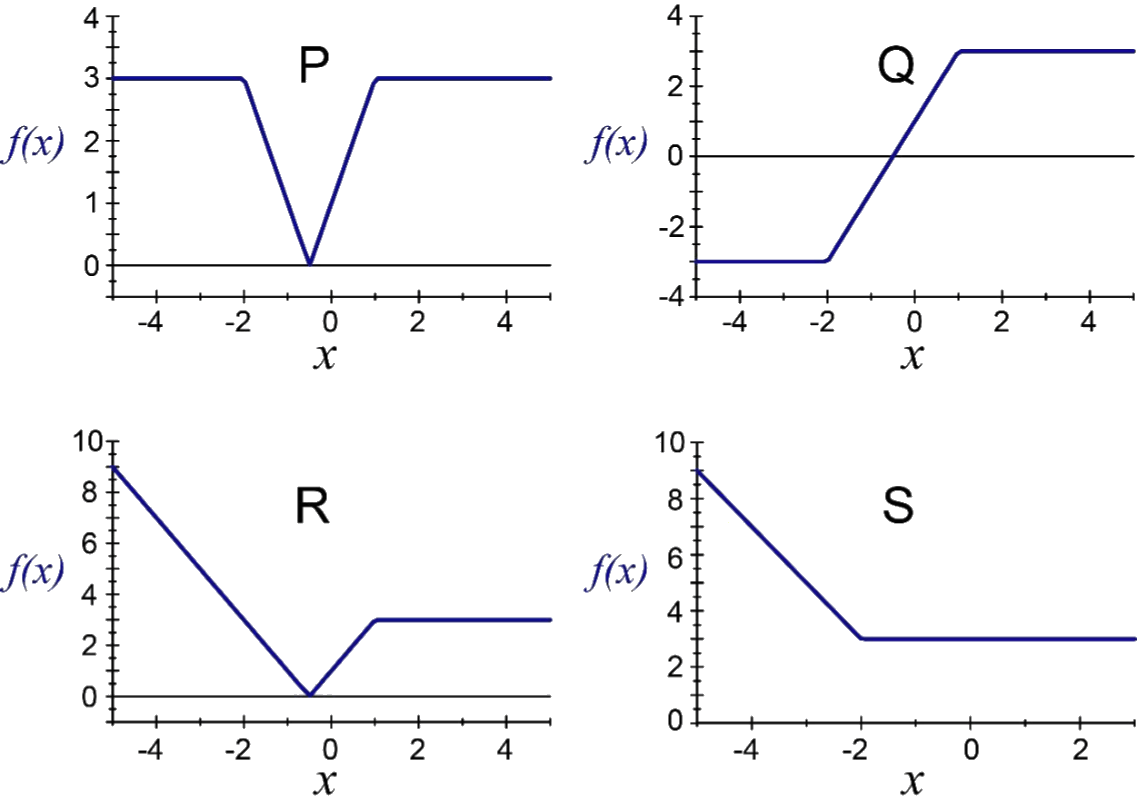
Which one of the given figures P, Q, R and S represents the graph of the following function?
f(x) = | |x + 2| − |x − 1| |
- AP
- BQ
- CR
- DS
Show answer
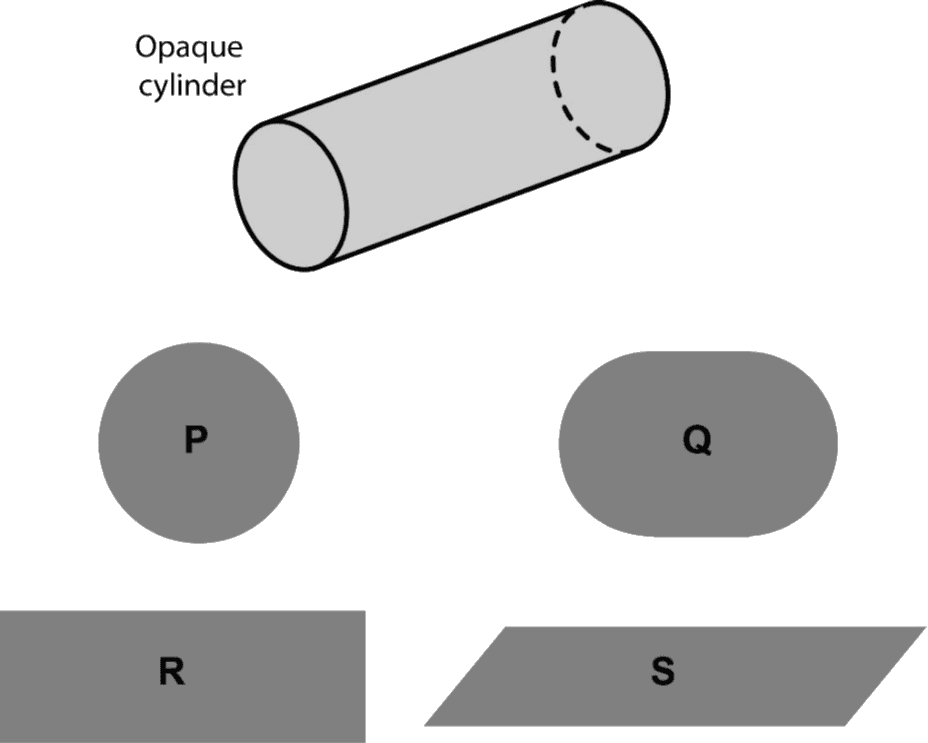
An opaque cylinder (shown below) is suspended in the path of a parallel beam of light, such that its shadow is cast on a screen oriented perpendicular to the direction of the light beam. The cylinder can be reoriented in any direction within the light beam. Under these conditions, which one of the shadows P, Q, R, and S is NOT possible?
- AP
- BQ
- CR
- DS
Show answer
XL-P: Chemistry (Q11–27)
17 questions (9 of 1 mark, 8 of 2 marks). Compulsory for every XL candidate.
Which one among the following mixtures gives a buffer solution in water?
- ACH3COOH + CH3COONa
- BCH3COOH + NaCl
- CNaOH + NaCl
- DNaOH + CH3COONa
Show answer
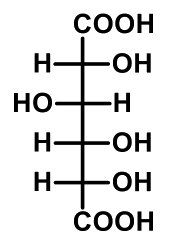
What is the major product formed in the given reaction?

- A

- B

- C

- D
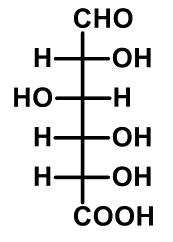
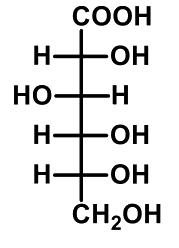
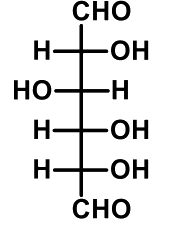
Show answer
The CORRECT order of stability of the given metal oxides is
- ALiO2 > NaO2 > KO2 > RbO2
- BLiO2 < NaO2 < KO2 < RbO2
- CLiO2 < NaO2 > KO2 > RbO2
- DLiO2 > NaO2 < KO2 < RbO2
Show answer
Which of the following is/are CORRECT when two single complementary strands of DNA come together to form a double helix at a given temperature?
(ΔS and ΔH are changes in entropy and enthalpy of the process, respectively.)
- AΔS > 0
- BΔS < 0
- CΔH > 0
- DΔH < 0
Show answer
Suitable reagent(s) to bring about the conversion of P to Q in good yield is/are
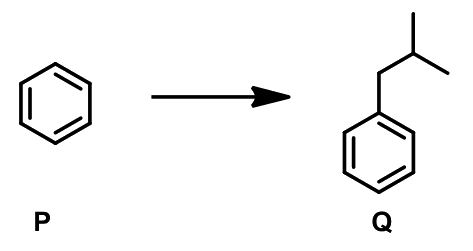
- A

- B

- C

- D

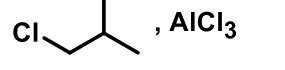
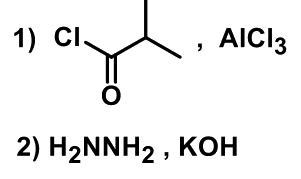
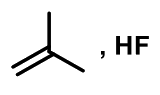
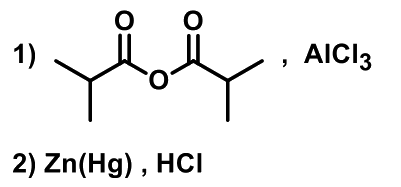
Show answer
Choose the CORRECT trend(s) of the first ionization energies among the following. (Given: Atomic numbers C: 6; N: 7; O: 8; F: 9; Si: 14; P: 15; S: 16; Cl: 17)
- AC < N > O < F
- BSi < P > S < Cl
- CC < N < O < F
- DSi < P < S < Cl
Show answer
The depression of freezing point of water (in K) for 0.1 molal solutions of NaCl and Na2SO4 are ΔT1 and ΔT2, respectively. Assuming the solutions to be ideal, the ratio ΔT1/ΔT2 is _____________ (rounded off to two decimal places).
Type a number as your answer.
Show answer
Considering cyclobutane to be planar, the number of planes of symmetry in the following compound is _____________ (in integer).
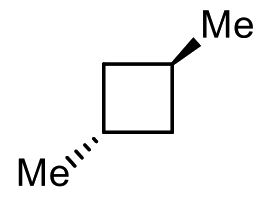
Type a number as your answer.
Show answer
The dipole moment (μ) of BrF is 1.42 D and the bond length is 176 pm. The atomic charge distribution (q) in the molecule is _____ (rounded off to two decimal places).
(Given: 1 D = 3.34 × 10⁻³⁰ C m; the factor e (electronic charge) = 1.60 × 10⁻¹⁹ C)
Type a number as your answer.
Show answer
Consider two different paths in which the volume of an ideal gas doubles isothermally:
i) Reversible expansion (work done = wrev)
ii) Irreversible expansion, with the external pressure equal to the final pressure of the gas (work done = wirrev)
Here, wrev/wirrev = ________________.
- A2 ln 2
- B½ ln 2
- C½ ln ½
- D2 ln ½
Show answer
A mixture of four peptides, PKKRK, RGERV, RYRGV and LVVYP, is loaded onto an ion-exchange column at pH = 7.2. If carboxymethyl (CM) cellulose is used as the stationary phase of this column, then which peptide elutes first?
Given:

- APKKRK
- BRGERV
- CRYRGV
- DLVVYP
Show answer
Match the coordination complexes given in Column I with the most appropriate properties in Column II.
(Given: Atomic numbers of Mn: 25; Co: 27; Ni: 28)
| Column I Coordination complexes | Column II Properties |
|---|---|
| E. [Mn(H2O)6]2+ | 1. 5.92 Bohr Magneton (BM) |
| F. [CoF6]3− | 2. CFSE = 0.4 Δo |
| G. [NiCl4]2− | 3. Metal ion hybridisation is sp3 |
| H. [Ni(CN)4]2− | 4. Diamagnetic |
- AE-1, F-2, G-3, H-4
- BE-2, F-1, G-4, H-3
- CE-4, F-2, G-1, H-3
- DE-1, F-4, G-3, H-2
Show answer
Compounds P and Q undergo E2 elimination with reaction rate constants of k1 and k2, respectively, as shown below. Which is/are the CORRECT option(s)?

- Ak1 > k2
- Bk2 > k1
- CMost stable conformer of P gives the product
- DMost stable conformer of Q gives the product
Show answer
According to Hard-Soft Acid-Base (HSAB) principle, the CORRECT option(s) for the solubility trend in water is/are
- AAgF > AgCl > AgBr > AgI
- BLiBr > LiCl > LiF
- CAgF < AgCl < AgBr < AgI
- DLiBr < LiCl < LiF
Show answer
Compound X gives alcohol P as the major product for the reaction shown below. Suitable option(s) for X is/are
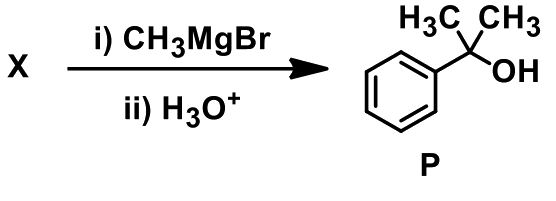
- A

- B

- C

- D

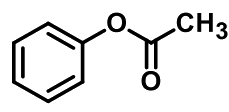
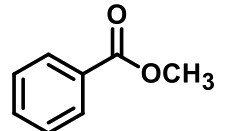
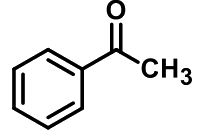

Show answer
The number of radial node(s) for the valence orbital of U(III) ion is _____ (in integer).
(Given: Atomic number of U is 92)
Type a number as your answer.
Show answer
E° = 1.10 V for the following cell reaction:
Zn(s) + Cu2+(aq) ⇌ Zn2+(aq) + Cu(s)
For this reaction, the equilibrium constant is y × 1037 at 298 K. The value of y is _____ (rounded off to two decimal places).
(Given: F = 96485 C mol−1, R = 8.314 J K−1 mol−1)
Type a number as your answer.
Show answer
XL-Q: Biochemistry (Q28–46)
19 questions (8 of 1 mark, 11 of 2 marks). Optional: answer it only if you pick Biochemistry. From GATE 2027 this section is called XL1.
Determine the correctness or otherwise of the following Assertion [a] and the Reason [r].
Assertion [a]: On a per carbon basis, palmitic acid yields more ATP than glucose.
Reason [r]: Carbons in palmitic acid are more reduced than those in glucose.
- ABoth [a] and [r] are true and [r] is the correct reason for [a]
- BBoth [a] and [r] are true but [r] is not the correct reason for [a]
- C[a] is true but [r] is false
- D[a] is false but [r] is true
Show answer
When cell components are fractionated by sedimentation, the correct order (from lower to higher gravitational force, g) in which the components get separated is _______.
- Anuclei, mitochondria, microsomes, and ribosomes
- Bmicrosomes, mitochondria, ribosomes, and nuclei
- Cnuclei, ribosomes, mitochondria, and microsomes
- Dribosomes, microsomes, mitochondria, and nuclei
Show answer
In a population, the probability of a susceptible individual getting infected with SARS-CoV-2 is low when a majority of individuals in the population becomes immune to this virus. This phenomenon is known as _______.
- Ainnate immunity
- Badaptive immunity
- Cactive immunity
- Dherd immunity
Show answer
Given below are four reactions of the glycolytic pathway catalyzed by the enzymes E1, E2, E3, and E4, as indicated. Which of these enzymes is/are NOT part of the gluconeogenesis pathway?

- AE1
- BE2
- CE3
- DE4
Show answer
Which of the following molecules is/are second messenger(s) produced by the phosphoinositide signaling cascade?
- APhosphatidylinositol 4,5-bisphosphate
- BInositol 1,4,5-triphosphate
- CInositol 1,3,5-triphosphate
- DDiacylglycerol
Show answer
A protein has seven cysteine residues. The maximum number of disulfide bonds of different combinations that can possibly be formed by these seven cysteine residues is _______ (in integer).
Type a number as your answer.
Show answer
A lyophilized sample of 20 nanomoles of an oligonucleotide is dissolved in water and the volume of the solution is made up to 200 μL. The concentration (in μM) of the oligonucleotide in this solution is ______ (in integer).
Type a number as your answer.
Show answer
DNA in a 1 cm long chromatin contains 5 × 10⁹ base pairs. The fold compaction of this DNA within the chromatin is _______ (in integer).
Type a number as your answer.
Show answer
Intracellular concentrations of ATP, ADP, and inorganic phosphate in four cell types are given below. Which one of these cell types has the most negative ΔG for ATP hydrolysis?
| Cell type | ATP (mM) | ADP (mM) | Inorganic phosphate (mM) |
|---|---|---|---|
| L | 3.0 | 1.8 | 5.0 |
| K | 3.9 | 1.3 | 3.0 |
| B | 2.7 | 0.7 | 2.7 |
| M | 7.2 | 0.9 | 8.0 |
- AL
- BK
- CB
- DM
Show answer
Which one of the following amino acids has more than two acid-base groups?
- AAlanine
- BLeucine
- CPhenylalanine
- DTyrosine
Show answer
Enzyme activity profiles as a function of time in the absence or presence of different types of feedback mechanisms are shown in the figure below. Match the following feedback mechanisms with the corresponding profiles in the figure.
(p) No feedback mechanism
(q) Negative feedback mechanism with short delay
(r) Negative feedback mechanism with long delay
(s) Positive feedback mechanism
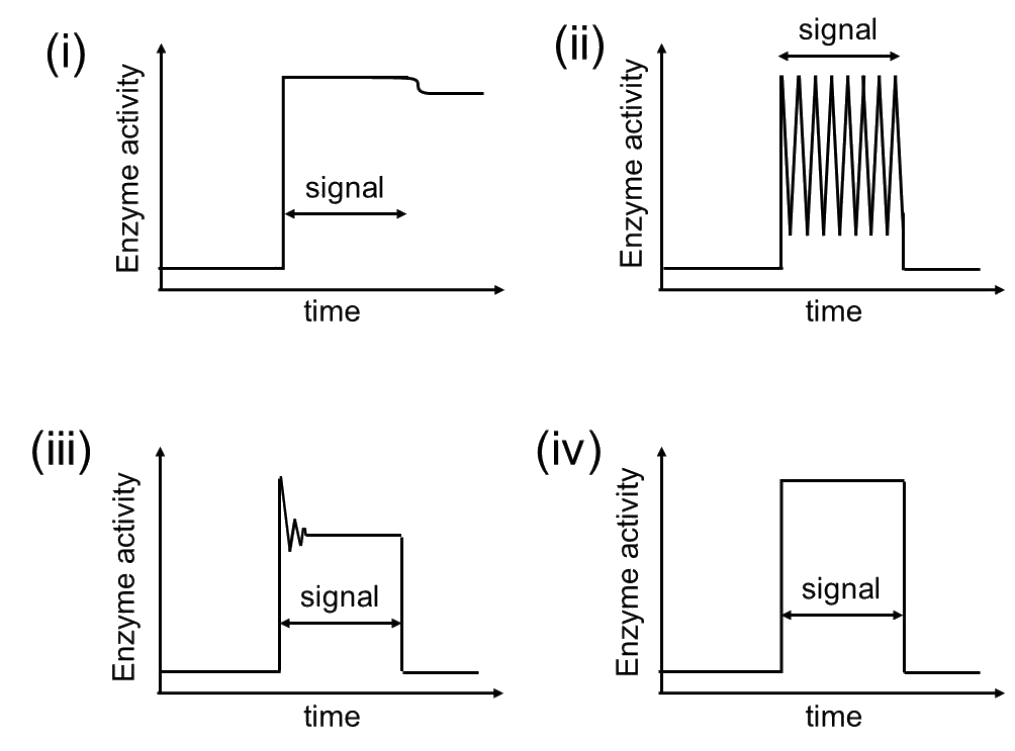
- A(p) – (i); (q) – (ii); (r) – (iii); (s) – (iv)
- B(p) – (iv); (q) – (iii); (r) – (ii); (s) – (i)
- C(p) – (iv); (q) – (ii); (r) – (iii); (s) – (i)
- D(p) – (i); (q) – (iii); (r) – (ii); (s) – (iv)
Show answer
A linear DNA fragment of 5 kilobase (kb) when completely digested with EcoRI produces 2.5 kb, 1.5 kb, and 1 kb fragments. Complete digestion of the same 5 kb fragment with XbaI produces 3.5 kb and 1.5 kb fragments. Which one of the following sets of fragments will be obtained if the 5 kb fragment is fully digested with EcoRI and XbaI simultaneously?
- A3 kb and 2 kb
- B2 kb and 1 kb
- C2 kb, 1.5 kb, 1 kb, and 0.5 kb
- D2.5 kb, 1.5 kb, 0.75 kb, and 0.25 kb
Show answer
Match the cell types listed in Group I with associated processes listed in Group II.
| Group I | Group II |
|---|---|
| (p) NK cells | (i) Antibody production |
| (q) B cells | (ii) First cells to be recruited at the site of infection |
| (r) Mast cells | (iii) Antibody-dependent cell-mediated cytotoxicity |
| (s) Neutrophils | (iv) Histamine production |
- A(p) – (ii); (q) – (i); (r) – (iii); (s) – (iv)
- B(p) – (ii); (q) – (i); (r) – (iv); (s) – (iii)
- C(p) – (iii); (q) – (i); (r) – (iv); (s) – (ii)
- D(p) – (iii); (q) – (ii); (r) – (i); (s) – (iv)
Show answer
Four statements about lipids are given below as options. Choose the statement(s) which is/are CORRECT.
- ACholesterol is amphipathic
- BSelf-assembly of phospholipids in water is due to hydrophobic effect
- CThe temperature at which the gel phase changes to liquid crystalline phase increases with an increase in the degree of unsaturation of fatty acyl tails
- DThe choline head group of lipids is positively charged
Show answer
Which of the following technique(s) can be used to separate proteins according to their molecular weights from a mixture of proteins?
- AIon exchange chromatography
- BSize exclusion chromatography
- CSodium dodecylsulfate – polyacrylamide gel electrophoresis (SDS-PAGE)
- DSucrose density gradient centrifugation
Show answer
B cells produce two forms of an immunoglobulin: (i) membrane-bound form, known as B cell receptor (BCR) and (ii) soluble form, known as antibody. Which of the following statements is/are CORRECT about BCR and antibody produced by the same B cell?
- ABCR and antibody have identical antigen binding site
- BBCR and antibody recognize different epitopes
- CBCR and antibody are encoded by the same gene
- DBCR and antibody are formed by differential splicing
Show answer
A 100 ml solution of pH 10 was well-mixed with a 100 ml solution of pH 4. The pH of the resultant 200 ml solution is ___________ (rounded off to two decimal places).
Type a number as your answer.
Show answer
An organism uses only the glycerophosphate shunt pathway to transport cytosolic NADH to mitochondria. For every two electrons transported, complex I, complex III, and complex IV of the electron transport chain in this organism transport 2.5, 1.5, and 2.0 protons (H+), respectively. The H+ to ATP ratio of FOF1-ATPase of this organism is 4.0. Terminal electron acceptor is oxygen. The number of ATP molecules synthesized by oxidizing NADH from glycolysis is __________ (rounded off to two decimal places).
Type a number as your answer.
Show answer
If the extracellular concentration of sodium ion (Na+) is ten times more than its intracellular concentration, then the sodium equilibrium potential at 20 ºC in mV is ________________ (rounded off to two decimal places). Assume that the membrane is permeable only to Na+ ions. [Use R = 1.987 cal deg−1 mol−1 and F = 23062 cal mol−1 V−1]
Type a number as your answer.
Show answer
XL-R: Botany (Q47–65)
19 questions (8 of 1 mark, 11 of 2 marks). Optional: answer it only if you pick Botany. From GATE 2027 this section is called XL2.
Which one of the following statements on Casparian strips is correct?
- ACasparian strips are specific to vascular plants found in epidermal cells.
- BCasparian strips are modifications mostly found in shoot tissue.
- CCasparian strips act as a cellular barrier to allow selective nutrient uptake and exclusion of pathogens.
- DCasparian strips are common in root endodermal cells of non-vascular plants.
Show answer
Rotenone is a chemical often used to kill insect pests on crop plants and fishes in lakes. Rotenone acts by inhibiting electron transport from the NADH dehydrogenase enzyme in Complex I to ubiquinone in the mitochondrial electron transport chain. Which one of the following explains why plants can tolerate rotenone application?
- AThe Complex I in plants is resistant to rotenone.
- BPlants inactivate rotenone by enzymatic degradation.
- CPlants have specific channels that efflux rotenone out of the cell.
- DPlants have additional NAD(P)H dehydrogenases that are resistant to rotenone.
Show answer
Although Pseudomonas syringae infection in plants is actively inhibited by the endogenous salicylic acid (SA) of host origin, a successful infection is still established because the bacterium secretes coronatine, an effector molecule. Which one of the following best describes the mode of action of coronatine?
- ACoronatine inhibits SA biosynthesis.
- BCoronatine promotes the biosynthesis of jasmonic acid (JA), and JA signaling in turn inhibits SA response.
- CCoronatine is a structural analogue of SA, which binds to the SA receptor and inhibits its function.
- DCoronatine is a structural analogue of jasmonic acid (JA), which activates JA signaling to inhibit SA response.
Show answer
The schematic depicts an unexpanded plant cell within a hypocotyl with the arrangement of cellulose microfibrils marked on its cell wall.

Which one of the following shapes would most likely result from the expansion of this cell if the pattern of the cellulose fibrils does not change?
- A

- B

- C

- D

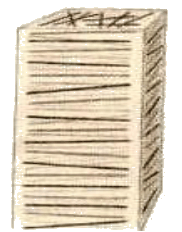



Show answer
Which one or more of the following statements is/are NOT CORRECT with respect to pollen development in angiosperm?
- ATapetal cell wall in all angiosperms breaks down to release the cytoplasmic content.
- BTapetal cell wall in all angiosperms remains intact.
- CTapetal cell wall breaks down in some angiosperm species, whereas it remains intact in others.
- DWithin an angiosperm species, the tapetal cell wall breaks down in some individuals and not in others.
Show answer
Regulation of phosphoenolpyruvate carboxylase (PEPCase) governs CO2 fixation in both C4 and CAM (crassulacean acid metabolism) plants. Which one or more of the following statements with respect to PEPCase activity is/are CORRECT?
- APEPCase in C4 plants is inactivated by dephosphorylation during the day.
- BPEPCase in CAM plants is inactivated by dephosphorylation during the day.
- CPEPCase in C4 plants is inactivated by dephosphorylation at night.
- DPEPCase in CAM plants is inactivated by dephosphorylation at night.
Show answer
Which one or more processes listed below DOES NOT/DO NOT produce carbon dioxide during fermentation?
- ABrewing wine using yeast.
- BBaking bread using yeast.
- CMaking yogurt using lactobacillus.
- DMaking cheese using fungus.
Show answer
The ovule of a diploid species with 2n = 8 undergoes double fertilization. If the pollen is contributed by an individual with meiotic nondisjunction, the chromosome number of the zygote will be _________.
Type a number as your answer.
Show answer
Match the tasks given in Group I with the associated techniques conventionally used as listed in Group II.
| Group I | Group II |
|---|---|
| P. Ploidy analysis | 1. RNA sequencing |
| Q. Profiling DNA methylation | 2. Exome sequencing |
| R. Identifying non-coding RNAs | 3. Fluorescence in situ hybridization |
| S. Identifying SNPs | 4. Bisulfite sequencing |
| T. Satellite DNA isolation | 5. Density-gradient centrifugation |
- AP-2; Q-1; R-3; S-4; T-5
- BP-3; Q-4; R-1; S-2; T-5
- CP-5; Q-4; R-1; S-2; T-3
- DP-3; Q-5; R-1; S-2; T-4
Show answer
Periderm is a protective tissue found in stems and roots of gymnosperm and woody dicotyledons. It contributes to the increased thickness by secondary growth. Match the peridermal components given in Group I with the cell/tissue types given in Group II.
| Group I | Group II |
|---|---|
| (P) Phelloids | (1) Tissue resembling cortical parenchyma |
| (Q) Phellogen | (2) Cork cambium |
| (R) Phellem | (3) Cork-like cells |
| (S) Phelloderm | (4) Cork |
- AP-4; Q-3; R-1; S-2
- BP-3; Q-2; R-4; S-1
- CP-2; Q-1; R-3; S-4
- DP-4; Q-1; R-3; S-2
Show answer
Match the following rice diseases in Group I with their causal agents in Group II.
| Group I | Group II |
|---|---|
| (P) Blast | (1) Sclerophthora macrospora |
| (Q) False smut | (2) Rhizoctonia solani |
| (R) Sheath blight | (3) Ustilaginoidea virens |
| (S) Downy mildew | (4) Puccinia graminis |
| (5) Magnaporthe grisea |
- AP-5; Q-3; R-2; S-1
- BP-4; Q-2; R-5; S-3
- CP-4; Q-5; R-3; S-1
- DP-5; Q-4; R-1; S-2
Show answer
Central vascular cylinder or stele consists of the primary vascular system (xylem and phloem) and the associate fundamental tissue. Match the schematics of stele in Group I (xylem shown in green, and phloem shown as a hatched block) with their respective types in Group II.
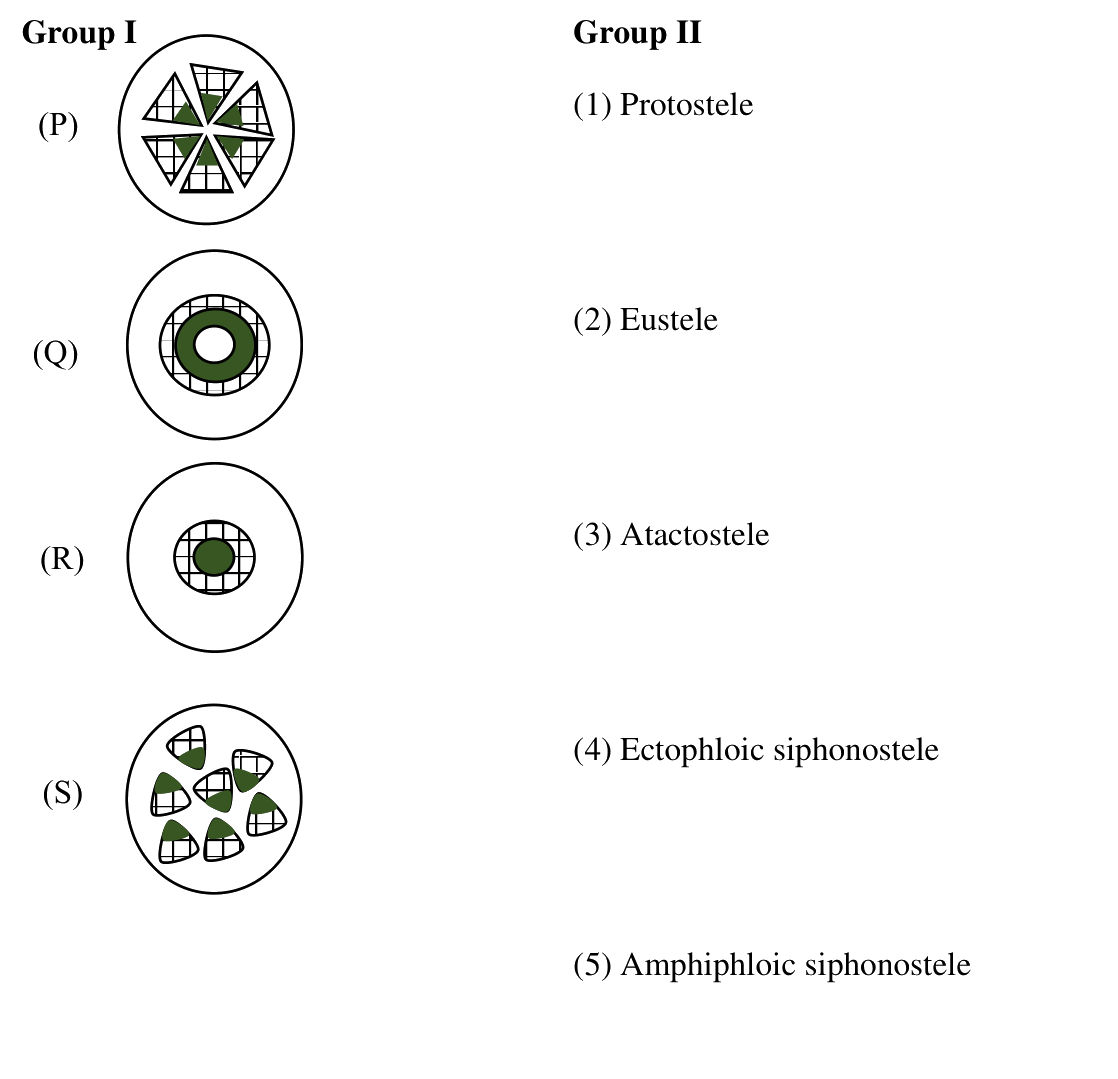
- AP-2; Q-4; R-1; S-3
- BP-5; Q-1; R-4; S-2
- CP-5; Q-3; R-1; S-2
- DP-3; Q-4; R-2; S-5
Show answer
Consider the following four experimental observations (i, ii, iii, iv) on the effect of the FT gene on flowering transition in the shoot apical meristem (SAM) of Arabidopsis thaliana.
i) The FT promoter is active in leaves alone.
ii) The ft null mutation causes delayed flowering transition of the SAM.
iii) Expressing a recombinant FT protein fused to nuclear localization signal sequence under the endogenous promoter does not rescue the delayed-flowering phenotype of the ft null mutant.
iv) Downregulation of FT transcript in the SAM by RNA interference in the wild-type background does not alter flowering transition.
Which one of the following conclusions best explains the above observations?
- AFT protein resident in leaves causes flowering transition of the SAM.
- BFT transcript moves from leaves to the meristem and promotes flowering.
- CFT protein moves from leaves to the SAM and promotes flowering.
- DBoth FT transcript and FT protein are required in the SAM to promote flowering.
Show answer
Which one of the options given correctly matches the alkaloids in Group I with their source plants in Group II?
| Group I | Group II |
|---|---|
| P. Cocaine | 1. Cocoa |
| Q. Caffeine | 2. Nightshade |
| R. Morphine | 3. Coca |
| S. Atropine | 4. Poppy |
- AP-3; Q-1; R-4; S-2
- BP-1; Q-3; R-4; S-2
- CP-2; Q-1; R-3; S-4
- DP-4; Q-2; R-1; S-3
Show answer
A drought tolerant rice genotype was found to be associated with a missense mutation in the gene A. Which one or more of the following experiments is/are appropriate to validate whether the mutation in A is the causal factor for drought tolerance?
- AIntroduce the same mutation in a drought sensitive rice genotype and test if it becomes drought tolerant.
- BDelete the wild-type A in drought sensitive plant and test if it becomes drought tolerant.
- CDetermine the stability of the protein encoded by the wild-type and the mutant forms of A.
- DRepair the mutation in the drought tolerant rice genotype and test if it becomes drought sensitive.
Show answer
Blue light can directly induce opening of stomata. Blue light also triggers photosynthesis in the guard cells, which indirectly induces stomatal opening. Which one or more of the following experimental approaches would test the direct effect of blue light on stomatal opening?
- AApplication of low photon fluxes of red light followed by high fluence rate of blue light.
- BApplication of high fluence rates of red light followed by low photon fluxes of blue light.
- CApplication of high fluence rates of blue light followed by high photon fluxes of red light.
- DInhibition of photosynthetic electron transport by dichlorophenyldimethylurea (DCMU).
Show answer
In a diploid angiosperm species, flower colour is regulated by the R gene. RR and Rr genotypes produce red flowers, whereas the rr genotype produces white flowers. If two individual plants are randomly selected from a large segregating population of a genetic cross between RR and rr parents, the probability of both the plants producing red flowers is _______. (Rounded off to two decimal places)
Type a number as your answer.
Show answer
A cytoplasmic male-sterile female plant with the restorer (nuclear) genotype rr is crossed to a male-fertile male plant with the genotype RR. Both RR and Rr can restore the fertility, whereas rr cannot. When an F1 female plant with Rr genotype was test-crossed to a male-fertile male plant with the rr genotype, the percentage of the population that is male fertile would be _______ %. (Answer in integer)
Type a number as your answer.
Show answer
The frequencies for autosomal alleles A and a are p = 0.5 and q = 0.5, respectively, where A is dominant over a. Under the assumption of random mating, the mating frequency among dominant parents is _________. (Rounded off to two decimal places)
Type a number as your answer.
Show answer
XL-S: Microbiology (Q66–84)
19 questions (8 of 1 mark, 11 of 2 marks). Optional: answer it only if you pick Microbiology. From GATE 2027 this section is called XL3.
Monkey pox is caused by a
- Adouble-stranded DNA virus
- Bsingle-stranded DNA virus
- Cdouble-stranded RNA virus
- Dsingle-stranded RNA virus
Show answer
Which one of the following converts sulfate to hydrogen sulfide?
- ABeggiatoa
- BDesulfovibrio
- CThiobacillus
- DThiothrix
Show answer
Which one of the statements about bacterial flagella is correct?
- AFlagella varies in length ranging from 0.5 to 2 µm.
- BFlagella are adjacent fibrils with regular patterns.
- CFlagella helps in conjugation.
- DFlagella originates from basal body.
Show answer
Microbial plastics are made from
- Apolyhydroxyalkanoates
- Bpolystyrene
- Cpolyurethane
- Dpolyvinyl chloride
Show answer
The correct sequence of metabolic intermediates in Krebs cycle is
- Aα-ketoglutarate → fumarate → succinate → malate
- Bfumarate → malate → succinate → α-ketoglutarate
- Cα-ketoglutarate → succinate → fumarate → malate
- Dsuccinate → α-ketoglutarate → malate → fumarate
Show answer
Catabolite repression in bacteria is regulated by the concentration of
- Aamino acids
- Bglucose
- Cmessenger RNA
- Dlactose
Show answer
Phagocytosis was first described by
- AElie Metchnikoff
- BRobert Hooke
- CRobert Koch
- DPaul Ehrlich
Show answer
Which one of the following statements about batch culture of microbes is NOT correct?
- ACells from stationary phase will show longer lag phase when inoculated in fresh growth medium compared to those collected from exponential phase.
- BDeath phase of culture is often exponential in nature.
- CStationary phase is the cryptic growth phase.
- DThe rate of generation of new cells during exponential growth phase is constant.
Show answer
Match the test in Group I with its application in Group II
| Group I | Group II |
|---|---|
| P. Oakley-Fulthorpe test | 1. IgM detection |
| Q. Limulus amoebocyte lysate test | 2. Determining antigen-antibody specificity |
| R. Weil-Felix reaction test | 3. Endotoxin detection |
| S. Complement-fixation test | 4. Rickettsial infection diagnosis |
- AP-2, Q-3, R-4, S-1
- BP-2, Q-1, R-4, S-3
- CP-3, Q-1, R-2, S-4
- DP-4, Q-3, R-2, S-1
Show answer
Which one of the following is NOT correct about antibiotic resistance mechanism in microbes?
- AMycoplasma is naturally resistant to penicillins due to presence of R plasmid.
- BGram-negative bacteria are impermeable to penicillin G.
- Cβ-lactamases of bacteria can cleave penicillins.
- DSelective microbes can efflux penicillins entering the cell and develop resistance.
Show answer
A suspension of photosynthetic green algae was illuminated in the presence of 14CO2 for few seconds. The first metabolite in the Calvin cycle to be radiolabeled will be
- Aglyceraldehyde
- B1,3-bisphosphoglycerate
- C3-phosphoglycerate
- Dribulose 1,5-bisphosphate
Show answer
Determine the correctness or otherwise of the following Assertion [a] and the Reason [r].
Assertion [a]: Endospore can survive heat that would rapidly kill vegetative cells of the same species.
Reason [r]: In endospore, the protoplasm is reduced to minimum volume as a result of the accumulation of calcium-dipicolinic acid complexes and small acid-soluble spore proteins, which forms a cytoplasmic gel and a thick cortex.
- ABoth [a] and [r] are true and [r] is the correct reason for [a]
- BBoth [a] and [r] are true and [r] is not the correct reason for [a]
- CBoth [a] and [r] are false
- D[a] is true but [r] is false
Show answer
Which one of the following conjugations will result in formation of merodiploids?
- AF+ donor × F− recipient
- BHfr donor × F− recipient
- CF′ donor × F− recipient
- DF+ donor × Hfr recipient
Show answer
Which of the following genus is/are a spirochete(s)?
- ABorrelia
- BLeptospira
- CSpirulina
- DTreponema
Show answer
Which of the following is/are non-membrane bound inclusion bodies?
- ACarboxysomes
- BCyanophycin granules
- CPoly-β-hydroxybutyrate granules
- DPolyphosphate granules
Show answer
Which of the following antibiotics is/are isolated from Streptomyces spp.?
- AGentamicin
- BNystatin
- CPolymyxins
- DTetracyclines
Show answer
Which of the following statements about the primary and secondary adaptive immune responses to an antigen is/are correct?
- AIgM antibodies appear first in response to the initial exposure of the antigen.
- BMajority of the antibodies produced in response to the second exposure of the same antigen are IgM isotype.
- CSecond exposure of the same antigen stimulates production of memory cells.
- DPrimary antibody response has shorter lag phase than secondary antibody response.
Show answer
The spontaneous, and induced mutations in bacteria can be distinguished by
- Afluctuation test
- Breplica plating
- Cdisc diffusion test
- Duse-dilution test
Show answer
During the exponential growth, it took 6 hours for the population of bacterial cells to increase from 2.5 × 10⁶ to 5 × 10⁸. The generation time of the bacterium, rounded off to the nearest integer, is ________ minutes.
Type a number as your answer.
Show answer
XL-T: Zoology (Q85–103)
19 questions (8 of 1 mark, 11 of 2 marks). Optional: answer it only if you pick Zoology. From GATE 2027 this section is called XL4.
Which one of the following animals has “Book Lungs” as a respiratory organ?
- AEarthworm
- BScorpion
- COctopus
- DStarfish
Show answer
Which one of the following describes the “innate behavior” of an animal?
- AA behavior that is triggered due to the change in environment.
- BA behavior that is trained by the parents.
- CA behavior that is determined by heredity.
- DA behavior that is learnt by “hit and trial” approach.
Show answer
Which one of the following represents a true “Ecological population” ?
- AA pitcher plant and a trapped fly in it
- BAll animals that live near each other in a national park
- CThe leeches and the flatworms that live in a forest
- DAll the lions in a reserve forest
Show answer
Which of the following animals show “Bottle cells” during the gastrulation stage of development?
- ASnails
- BAmphibians
- CBirds
- DMammals
Show answer
The organisms that obtain energy from inorganic compounds are known as
- AAutotrophs
- BOrganotrophs
- CLithotrophs
- DPhototrophs
Show answer
Which of the following is/are the causative agent(s) of Filariasis?
- AWuchereria bancrofti
- BLeishmania donovani
- CBrugia malayi
- DTrypanosoma gambiense
Show answer
In a population of 1000 wild dogs in a grassland, 360 and 480 dogs had black body colour with genotypes BB and Bb, respectively. In the same population, remaining dogs were white in colour with a genotype of bb. Based on this data, the frequency of allele “b” in the population is ______ (round off to one decimal place).
Type a number as your answer.
Show answer
A mature rat sperm cell has 2.5 µg of genomic DNA that is equivalent of a haploid genome. Compared to this sperm cell, the amount of genomic DNA (in µg) in a somatic cell, which is in the G2 phase of cell cycle, will be _____ (in integer).
Type a number as your answer.
Show answer
In an experiment, excess amount of bicod mRNA (more than wild-type expression level) was injected into the posterior pole of a wild-type Drosophila embryo at pre-blastodermal stage. Out of the following options, which one represents the best expected phenotype in the resulted developing embryo?
- ANormal embryo with head structure at anterior and tail structure at posterior pole
- BHead structure only at posterior pole of the embryo
- CTail structure at anterior and head structure at posterior poles of the embryo
- DHead structure at both anterior and posterior poles of the embryo
Show answer
Match the hormones/precursors listed in Column I with their chemical type in Column II and the tissue of origin listed in Column III
| Column I | Column II | Column III |
|---|---|---|
| P. Glucagon | (i) Tryptophan derivative | a. Anterior pituitary |
| Q. Pregnenolone | (ii) Peptide | b. Pineal |
| R. FSH | (iii) Steroid | c. Adrenal |
| S. Melatonin | (iv) Glycoprotein | d. Pancreas |
- AP – (ii) – d ; Q – (iii) – c ; R – (iv) – a ; S – (i) – b
- BP – (ii) – d ; Q – (iv) – a ; R – (i) – c ; S – (iii) – b
- CP – (i) – c ; Q – (ii) – b ; R – (iv) – d ; S – (iii) – a
- DP – (iv) – a ; Q – (i) – d ; R – (ii) – b ; S – (iii) – c
Show answer
Match the syndromes listed in Column I with the cause/symptoms listed in Column II
| Column I | Column II |
|---|---|
| P. Prader-Willi syndrome | (i) a collection of signs and symptoms due to prolonged exposure to corticosteroids like cortisol |
| Q. Down syndrome | (ii) a syndrome of inadequate reabsorption in the proximal renal tubule of the kidney |
| R. Cushing syndrome | (iii) a genetic disorder usually caused by the deletion of a part of chromosome 15 |
| S. Turner syndrome | (iv) a genetic disorder caused by the presence of all or part of a third copy of chromosome 21 |
| T. Fanconi syndrome | (v) a genetic condition in which a female has partially or completely missing an X chromosome |
- AP – (ii) ; Q – (v) ; R – (iv) ; S – (iii) ; T – (i)
- BP – (iv) ; Q – (iii) ; R – (i) ; S – (ii) ; T – (v)
- CP – (iii) ; Q – (iv) ; R – (i) ; S – (v) ; T – (ii)
- DP – (v) ; Q – (iv) ; R – (ii) ; S – (i) ; T – (iii)
Show answer
Match the immunological statements in Column I with the appropriate descriptions from Column II
| Column I | Column II |
|---|---|
| P. Active acquired immunity | (i) Complement proteins and interferons |
| Q. First line of defense | (ii) Direct contact with pathogens that enter the body |
| R. Passive natural immunity | (iii) Surface barriers |
| S. Second line of defense | (iv) Antibodies pass through placenta |
- AP – (ii) ; Q – (iii) ; R – (iv) ; S – (i)
- BP – (iv) ; Q – (iii) ; R – (i) ; S – (ii)
- CP – (iv) ; Q – (ii) ; R – (iii) ; S – (i)
- DP – (i) ; Q – (iv) ; R – (iii) ; S – (ii)
Show answer
Match the standard/stated cofactors in Column I with their respective enzymes in Column II
| Column I | Column II |
|---|---|
| P. Cu2+ | (i) Dinitrogenase |
| Q. Se | (ii) Cytochrome oxidase |
| R. Ni2+ | (iii) Pyruvate kinase |
| S. K+ | (iv) Glutathione peroxidase |
| T. Mo | (v) Urease |
- AP – (v) ; Q – (ii) ; R – (iv) ; S – (i) ; T – (iii)
- BP – (ii) ; Q – (iv) ; R – (v) ; S – (iii) ; T – (i)
- CP – (iv) ; Q – (ii) ; R – (iii) ; S – (i) ; T – (v)
- DP – (ii) ; Q – (i) ; R – (iii) ; S – (iv) ; T – (v)
Show answer
The presence of excess glucose has been known to prevent the induction of lac operon as well as other operon controlling enzymes involved in carbohydrate metabolism in E. coli. Which of the following processes define(s) the phenomenon?
- ACatabolite repression
- BAttenuation
- CGlucose effect
- DFeedback inhibition
Show answer
Which of the following techniques is/are used for determining the three-dimensional structure of proteins?
- ACryo-electron Microscopy
- BCircular Dichroism
- CNuclear Magnetic Resonance Spectroscopy
- DX-ray Diffraction
Show answer
Among the following statements, which is/are TRUE regarding the replication of DNA?
- AReplication is bidirectional and conservative in nature.
- BReplication in eukaryotes takes place at multiple Ori sites simultaneously.
- CBoth the strands replicate in discontinuous manner.
- DOne strand replicates in continuous while the other replicates in discontinuous manner.
Show answer
Which of the following statements is/are TRUE for Colchicine?
- AIt binds to tubulin molecule and disrupts the assembly/polymerization of microtubule.
- BIt inhibits crossover of chromosomes during meiosis.
- CIt inhibits chromosome condensation during Prophase.
- DIt blocks mitotic cells in Metaphase.
Show answer
Wild-type Drosophila females having three linked genes (AABBCC) were crossed with triple recessive mutant (aabbcc) males. The F1 female progenies (AaBbCc) were back crossed with the triple negative mutant (aabbcc) males. The cross resulted in following number of progenies in F2:
| AaBbCc | 241 |
| Aabbcc | 112 |
| aaBbCc | 103 |
| aabbcc | 252 |
| aaBbcc | 17 |
| aabbCc | 134 |
| AabbCc | 14 |
| AaBbcc | 127 |
| Total | 1000 |
|---|
The order of genes as determined from the above data was found to be “ABC” (note that the order is equivalent to “CBA” and the order outside the markers are arbitrary). The recombination map distance (in centi Morgan) between “A to C” is ______ (round off to one decimal place).
Type a number as your answer.
Show answer
The length of a double helical DNA molecule is 13.6 km. If the DNA double helix weighs 1 × 10⁻¹⁸ g per 1000 nucleotide pairs and rise per base pair is 3.4 Å, then weight of the double helical DNA molecule (in nanogram) will be ______ (in integer).
Type a number as your answer.
Show answer
XL-U: Food Technology (Q104–122)
19 questions (8 of 1 mark, 11 of 2 marks). Optional: answer it only if you pick Food Technology. From GATE 2027 this section is called XL5.
Choose the correct group of fat soluble vitamins
- ACholecalciferol, α-Tocopherol, Menadione
- BThiamine, Cholecalciferol, α-Tocopherol
- CNiacin, α-Tocopherol, Menadione
- DBiotin, Thiamin, Niacin
Show answer
The synthesis of thyroxine T4 in human body requires
- ASelenium
- BIodine
- CIron
- DZinc
Show answer
Which among the followings is NOT an essential amino acid?
- AL-Phenylalanine
- BL-Valine
- CL-Lysine
- DL-Arginine
Show answer
The time required for stipulated destruction of a microbial population at a given temperature is
- AD-value
- BF-value
- Cz-value
- DQ10 value
Show answer
Which among the following statements is NOT correct?
- ACod fish is a major source of ω-3 fatty acids.
- BBeetroot is a good source of β-carotene.
- CApple is a good source of vitamin B12.
- DFresh sugarcane juice is a good source of polyphenol oxidase.
Show answer
Calculate the efficiency in percent (rounded off to 1 decimal place) of an oil expeller which yields 37 kg oil containing 5% solid impurities from 100 kg mustard seeds. The oil content of the mustard seed is 38%.
Type a number as your answer.
Show answer
Orange juice is packaged aseptically and stored under ambient conditions. The degradation of vitamin C in the juice occurs during storage and it follows first order reaction kinetics. The degradation rate constant is 5.2×10⁻³ day-1. The half-life of vitamin C in days is ____________ (in integer).
Type a number as your answer.
Show answer
The weight of 10 kg dried cauliflower containing 5% moisture (wet basis) after rehydration is 60 kg. If the fresh cauliflower contained 87% moisture (wet basis), calculate the coefficient of rehydration (rounded off to 2 decimal places).
Type a number as your answer.
Show answer
Some of the industrial products are produced by fermentation processes. Identify the correct pair of product and fermentative microorganism.
- AVinegar – Acetobacter aceti
- BCitric acid – Enterbacter aerogenes
- CEthanol – Saccharomyces cerevisiae
- DL-Lysine – Aspergillus niger
Show answer
Choose the correct statement(s) about the enzyme and its application in food processing reaction.
- AChymosin is widely used in cheese manufacturing.
- BThermolysin is used in the synthesis of Aspartame.
- Cβ-Galactosidase catalyzes the hydrolysis of galactose.
- DLipase is used for restructuring of acyl glycerol.
Show answer
Identify the Gram +ve bacteria responsible for causing food borne diseases among the followings
- ACampylobacter jejuni
- BClostridium botulinum
- CVibrio cholerae
- DSalmonella typhi
Show answer
Extrusion cooking is accomplished in four different stages, which are indicated as I, II, III and IV in the figure given below. Choose the correct option representing the name of each stage.
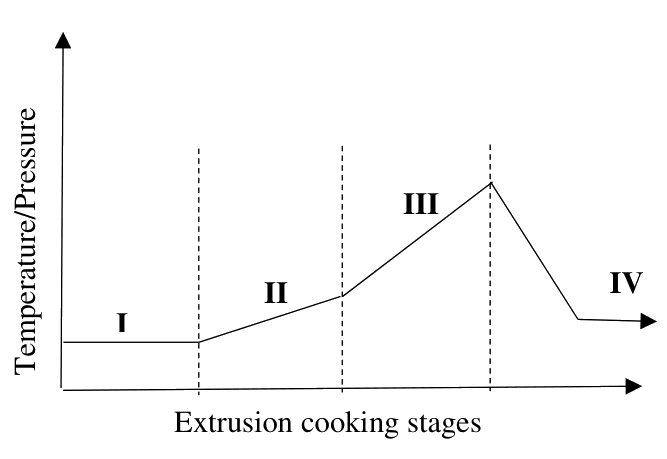
- AI – Feeding, II – Cooking, III – Kneading, IV – Expansion
- BI – Kneading, II – Feeding, III – Cooking, IV – Expansion
- CI – Feeding, II – Kneading, III – Cooking, IV – Expansion
- DI – Cooking, II – Kneading, III – Feeding, IV – Expansion
Show answer
Match the method/ value used for measuring lipid characteristics in Column I with the corresponding properties indicated by them, in Column II.
| Column I | Column II |
|---|---|
| P. Thiobarbituric acid test | 1. Induction time |
| Q. Rancimat method | 2. Degree of unsaturation |
| R. Peroxide value | 3. Carbonyl content |
| S. Iodine value | 4. Hydroperoxide content |
- AP-3, Q-1, R-4, S-2
- BP-1, Q-3, R-4, S-2
- CP-3, Q-1, R-2, S-4
- DP-3, Q-4, R-1, S-2
Show answer
Match the peeling technique in Column I with the vegetable, for which it is used in industry, given in Column II.
| Column I | Column II |
|---|---|
| P. Knife peeling | 1. Brinjal |
| Q. Abrasion peeling | 2. Tomato |
| R. Flame peeling | 3. Potato |
| S. Flash peeling | 4. Cucumber |
- AP-3, Q-4, R-1, S-2
- BP-4, Q-1, R-3, S-2
- CP-4, Q-3, R-2, S-1
- DP-4, Q-3, R-1, S-2
Show answer
Match the process in Column I with the related food component in Column II.
| Column I | Column II |
|---|---|
| P. Caramelization | 1. Lipid |
| Q. Denaturation | 2. Sugar |
| R. Oxidation | 3. Pigment |
| S. Bleaching | 4. Enzyme |
- AP-2, Q-4, R-1, S-3
- BP-2, Q-1, R-4, S-3
- CP-1, Q-3, R-2, S-4
- DP-2, Q-1, R-3, S-4
Show answer
Identify the correct statement(s) related to grain polysaccharides among the followings.
- ADextrin are a group of low molecular weight polysaccharides produced by dry hydrolysis of starch.
- BAmylose is a linear polymer of D-glucose units joined by α (1→6) glycoside linkages.
- CAmylopectin is a branched chain polymer of D-galactose monomer units.
- DRetrogradation is a process of reassociation of amylose and formation of crystalline structure by gelatinized starch upon cooling.
Show answer
A sample of glucose isomerase enzyme converts 15 µmoles of substrate glucose into product fructose min-1 mL-1 under standard assay conditions. The enzyme activity of the glucose isomerase in International Unit (IU) is _______ (in integer).
Type a number as your answer.
Show answer
If D10 for Salmonella in egg yolk is 0.75 kGy, calculate the radiation dose in kGy (rounded off to 2 decimal places) required for reducing the Salmonella count in egg yolk by 8 log cycles.
Type a number as your answer.
Show answer
The average moisture binding energy of a textured protein product (TPP) at 8% moisture content (dry basis) is 3200 cal mol−1. If the water activity of the TPP at the above moisture content is 0.30 at 30 ℃, the water activity of the sample at 45 ℃ is __________ (rounded off to 2 decimal places). The value of Gas constant R = 1.987 cal mol−1 K−1.
Type a number as your answer.
Show answer
Changes in the final answer key
Marks to all: Q6, Q112, Q113. Every other question has the answer shown.
How to revise from this paper
- Pick your two optional sections firstAttempt GA, XL-P and the two sections you plan to choose, 65 questions in one 3-hour sitting.
- Score it the GATE wayAdd 1 or 2 marks per correct answer and subtract 1/3 or 2/3 only for wrong MCQs. MSQ must be fully correct to score.
- Sort your mistakes by topicUse the topic tag on each question. Two or three misses in the same topic show where to revise first.
- Repeat with another yearTake a different year a week later and compare your topic-wise mistakes.
Keep going