

All 145 questions from the CSIR-NET Life Sciences June 2024 paper (Shift 2), typed out in full, with NTA’s final answer key, a worked solution for every question and every diagram.
The Joint CSIR-UGC NET June 2024 Life Sciences exam was held on 26 July 2024 in two shifts. This page covers the afternoon shift (Shift 2, 3 pm to 6 pm). Below you will find every question from Part A (General Aptitude), Part B and Part C, in the order they appeared, each tagged with its syllabus unit. Tap Show answer and solution under any question to check the official answer and see how to reach it.
Marking scheme
| Part | Questions | Answer | Marks each | Wrong answer | Max marks |
|---|---|---|---|---|---|
| A: General Aptitude | Q1–20 | 15 | 2 | −0.5 | 30 |
| B: Life Sciences | Q21–70 | 35 | 2 | −0.5 | 70 |
| C: Life Sciences | Q71–145 | 25 | 4 | −1 | 100 |
| Total | 145 | 75 | 200 |
Which units this paper tested
We tagged each of the 125 Part B and Part C questions with its CSIR-NET syllabus unit. In this paper, Ecological Principles, System Physiology – Plant and Evolution and Behavior carried the most questions.
Practise any unit across all 11 papers, with every question linked to a worked solution:
Jump to a question
Part A: General Aptitude (Q1–20)
20 questions; answer any 15. Each carries 2 marks, and a wrong answer costs 0.5.
If liars always lie and truthful persons never, and in a group of 10 persons everyone calls all others liars, then the number of liars among the 10 is
- 110
- 29
- 35
- 41
Show answer and solution
A truthful person who says “all the others are liars” is right only if every other person lies, so there can be at most one truthful person. If all ten lied, each liar’s statement would be true, which is impossible, so there is exactly one truthful person and 9 liars.
A chess board contains 64 squares of 5 cm size, in 8 rows and 8 columns, alternately black and white. What is the total length of edges (in m) between the squares in the chessboard?
- 12.8
- 23.2
- 35.6
- 46.4
Show answer and solution
An 8 × 8 board has 7 internal lines in each direction, and each line is 8 squares × 5 cm = 40 cm long. Total = 2 × 7 × 40 = 560 cm = 5.6 m.
In a family of two males and three females, A is the daughter of B and sister of C. E is the spouse of B and mother of D. C is not the brother of D. Which of the following statements is NOT correct?
- 1E is the mother of A
- 2D is the sister of C
- 3C is the daughter of B
- 4A is the sister of D
Show answer and solution
B and E are the parents, and A, C and D are their children. “C is not the brother of D” makes C a girl. With three females (A, C and the mother E), B and D must be male. D is therefore C’s brother, so “D is the sister of C” is the incorrect statement.
The difference between a three-digit number (with non-repeating digits) and the same number in the reverse order is always divisible by
- 133
- 222
- 313
- 431
Show answer and solution
abc − cba = (100a + 10b + c) − (100c + 10b + a) = 99(a − c). 99 = 9 × 11, so the difference is always divisible by 33 (and 9, 11 and 99), but not necessarily by 22, 13 or 31.
A car is moving along a bend in a road. The bend forms a large quarter circle. If the distance between the left and right wheels of the car is 2 m, then the difference between the distances travelled by the inner wheels and the outer wheels (in m) as it traverses the bend is
- 10
- 22
- 3π
- 42π
Show answer and solution
A quarter circle of radius R has length (π/2)R. The outer wheels follow radius R + 2. Difference = (π/2)(R + 2) − (π/2)R = π m, whatever the size of the bend.
The speed of a car travelling with variable acceleration along a straight line is shown in the figure.
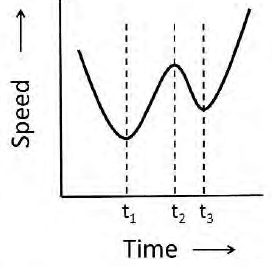
If a1, a2, a3 are the accelerations at times t1, t2, t3, respectively, then
- 1a1 = a2 = a3
- 2a1 > a3 > a2
- 3a2 > a3 > a1
- 4a3 > a2 > a1
Show answer and solution
Acceleration is the slope of the speed–time curve. t1 is a minimum, t2 a maximum and t3 a minimum, so the slope is zero at each: a1 = a2 = a3 = 0.
The following graph shows the mortality risk of a disease with respect to parameters A and B.
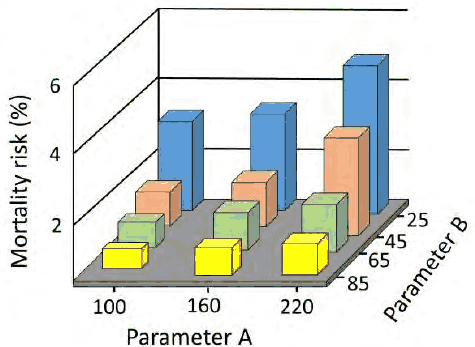
Which of the following combinations of parameters is associated with the lowest mortality risk?
- 1The lowest value of A − B
- 2The lowest value of B − A
- 3The lowest values of both A and B
- 4The highest values of both A and B
Show answer and solution
Risk is lowest at low A (100) and high B (85), and highest at high A with low B. Low A combined with high B means the lowest value of A − B.
The cost of 2 mangoes, 1 coconut and 2 bananas is Rs 71, while the cost of 5 mangoes, 3 coconuts and 4 bananas is Rs 182. What is the cost of 1 mango and 1 coconut?
- 1It cannot be calculated
- 2Rs 40
- 3Rs 47
- 4Rs 53
Show answer and solution
Doubling the first equation gives 4m + 2c + 4b = 142. Subtracting it from 5m + 3c + 4b = 182 leaves m + c = 40. The banana cost cancels, so ₹40.
Three comparable brands of 1 litre cans of a liquid detergent are available in a shop with different offers as shown in the table.
| Brand | List price (in Rs per can) | Offer |
|---|---|---|
| A | 320 | 1/3rd extra |
| B | 332 | 1 free for 3 |
| C | 300 | 20% discount |
If 4 litres of detergent is to be purchased, then the best choice (based on unit price) would be
- 1A or B
- 2A or C
- 3B or C
- 4B
Show answer and solution
Cost per litre: A = 320/(4/3) = ₹240. B = 3 × 332/4 = ₹249. C = 0.8 × 300 = ₹240. A or C is best.
The largest integer between 1 and 105 when written in words that does not contain the letter ‘N’ or ‘n’ in its name is
- 188
- 2100000
- 388888
- 48
Show answer and solution
Written in words, every number using “one”, “seven”, “nine”, “ten”, “-teen”, “twenty”, “hundred” or “thousand” contains an N. Hundreds and thousands are therefore ruled out, so the largest such number is the largest under 100 built from the remaining words: 88, eighty-eight.
Human females have two X chromosomes, each of which can be passed on to their son or daughter with equal probability. Human males have one X chromosome which is passed on to their daughters and one Y chromosome which is passed on to their sons. Assuming equal numbers of males and females in a population, if an X chromosome is randomly sampled from the population, what is the probability that it was inherited from a female of the previous generation?
- 11/3
- 21/4
- 32/3
- 43/4
Show answer and solution
Take one male and one female. They carry 3 X chromosomes. The female’s two came one from her mother and one from her father, and the male’s one came from his mother. So 2 of the 3, that is 2/3, came from a female.
The graph shows the distribution of lifespan (in years) for individuals from species 1 and species 2.
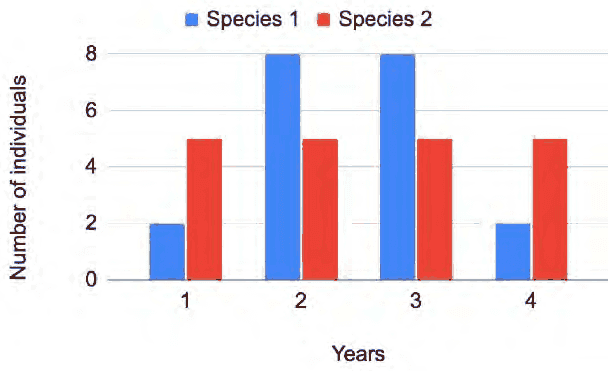
If μ and σ represent mean and standard deviation of the lifespan, respectively, then, which of the following statements is true?
- 1μ1 > μ2; σ1 > σ2
- 2μ1 = μ2; σ1 = σ2
- 3μ1 = μ2; σ1 > σ2
- 4μ1 = μ2; σ1 < σ2
Show answer and solution
Species 1 has 2, 8, 8 and 2 individuals at 1–4 years, and species 2 has 5, 5, 5 and 5. Both are symmetric about 2.5 years, so the means are equal. Species 1 is concentrated in the middle, so its spread is smaller: σ1 < σ2.
Two rings made of metals A and B with ring A having a larger diameter, are placed concentrically leaving an annular gap. The thermal expansion coefficients of the two metals are CA and CB. Identify the correct statement(s) from the following.
- A. The gap will decrease if CA < CB.
- B. The gap will remain the same if CA = CB.
- C. The gap will increase if CA < CB.
- 1Only A
- 2A and B
- 3Only C
- 4B and C
Show answer and solution
Ring B sits inside ring A. If B expands proportionally more (CA < CB), the gap shrinks (A true, C false). If the coefficients are equal, both rings grow by the same fraction and the gap grows in proportion, so it does not stay the same (B false). Only A.
How many integers can divide 1184 leaving a remainder of 29?
- 18
- 25
- 37
- 49
Show answer and solution
A divisor leaving remainder 29 must divide 1184 − 29 = 1155 and be greater than 29. 1155 = 3 × 5 × 7 × 11, and its divisors above 29 are 33, 35, 55, 77, 105, 165, 231, 385 and 1155: 9 numbers.
A pen, pencil and an eraser together cost Rs. 21. The pen costs as much more than the pencil as the pencil does than the eraser. How much does the pencil cost?
- 15
- 27
- 39
- 411
Show answer and solution
The three prices are in arithmetic progression (pen − pencil = pencil − eraser), so the pencil is the average: 21/3 = ₹7.
In a class, boys secure 69% marks on the average while girls secure 72% marks on the average. If the average marks of the entire class is 70% which of the following statements is valid?
- 1The total number of students in the class is two times the number of girls.
- 2The total number of students in the class is three times the number of boys.
- 3The boys are two times the number of girls.
- 4The girls are two times the number of boys.
Show answer and solution
69b + 72g = 70(b + g) gives 2g = b. There are twice as many boys as girls, which makes sense because the class average is closer to the boys’ average.
A cardboard sheet of size 60 cm × 60 cm is used to make hollow cubes having sides of 5 cm. What is the maximum number of cubes that can be made?
- 124
- 236
- 372
- 4144
Show answer and solution
A hollow cube of side 5 cm needs 6 × 25 = 150 cm2 of card. 3,600/150 = 24 cubes, and 5 cm squares tile the 60 cm sheet exactly, with 144 squares making 24 sets of 6.
If Pencils are Erasers, some Erasers are Sharpeners, some Erasers are Crayons, no Crayons are Sharpeners but some Crayons are Pencils then in the given Venn diagram, which of the following is represented by the shaded area?
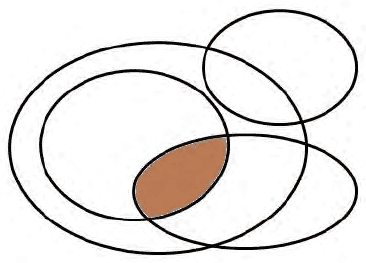
- 1Pencils and Sharpeners but not Erasers and Crayons
- 2Pencils and Erasers but not Sharpeners and Crayons
- 3Pencils, Erasers, and Sharpeners but not Crayons
- 4Pencils, Erasers and Crayons but not Sharpeners
Show answer and solution
All pencils are erasers, so the pencil circle sits inside the eraser oval. Sharpeners overlap only the erasers, and crayons overlap the erasers and pencils but not the sharpeners. The shaded region lies inside pencils, erasers and crayons but outside sharpeners: pencils, erasers and crayons, not sharpeners.
A ball of moulding clay, whose radius is a, is remoulded into a cube. What is the approximate length of the side of the largest cube that can be so made?
- 10.8a
- 21.2a
- 31.6a
- 42a
Show answer and solution
Volume is conserved: s3 = (4/3)πa3 ≈ 4.19a3, so s = ∛4.19 × a ≈ 1.6a.
The following spider diagram shows the marks obtained (out of 10) by three students in five tests.
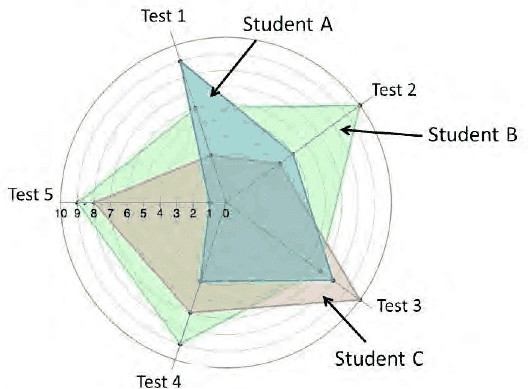
Which one of the following is INCORRECT?
- 1A scored more than C in total
- 2B scored the highest in total
- 3A never scored 10 marks in a test
- 4In Test 5, the combined marks of A and C are equal to the marks of B.
Show answer and solution
Reading the radar chart, A’s scores (high only in Test 1) add up to less than C’s, while B has the largest polygon and so the highest total. A’s best is 9, not 10. In Test 5, A and C together equal B. So “A scored more than C in total” is the incorrect statement.
Part B: Life Sciences (Q21–70)
50 questions; answer any 35. Each carries 2 marks, and a wrong answer costs 0.5.
Which one of the following is considered as a renal hormone?
- 1Megalin
- 2Cubilin
- 3Renalase
- 4Uroguanylin
Show answer and solution
Renalase is a flavoprotein secreted by the kidney into the blood that breaks down catecholamines and helps regulate blood pressure, so it is a renal hormone. Megalin and cubilin are proximal-tubule endocytic receptors, and uroguanylin comes from the gut.
Which of following is a likely consequence of a loss of function mutation in the gene encoding the enzyme phenylalanine ammonia-lyase (PAL) in coffee plants?
- 1Increased levels of caffeine.
- 2Decreased lignins in cell walls.
- 3Increased lignins in cell walls.
- 4Decreased levels of caffeine.
Show answer and solution
PAL catalyses the first step of the phenylpropanoid pathway (phenylalanine to cinnamic acid), which leads to monolignols and so to lignin. Losing it reduces lignin in the cell walls. Caffeine is a purine alkaloid made by a separate pathway.
Greenhouse Gas emissions are considered the primary driver of global warming through their influence on the radiative forcing of the atmosphere. This radiative forcing occurs because
- 1longwave radiation emitted by the earth’s surface is absorbed and scattered.
- 2shortwave radiation received from the sun is absorbed and scattered.
- 3shortwave radiation emitted by the earth’s surface is absorbed and scattered.
- 4longwave radiation arriving from the sun is selectively transmitted.
Show answer and solution
The Sun’s shortwave radiation passes through the atmosphere and warms the surface, which then emits longwave (infrared) radiation. Greenhouse gases absorb and re-emit this outgoing infrared, warming the lower atmosphere: radiative forcing.
In which one the following, the proton motive force generated in mitochondrial electron transport is NOT used?
- 1Transport of ATP into the cytosol from mitochondrial matrix.
- 2Transport of ADP from the cytosol into the mitochondrial matrix.
- 3Transport of phosphate ions from the cytosol into the mitochondrial matrix.
- 4Transport of NADH from the cytosol into the mitochondrial matrix.
Show answer and solution
The proton-motive force drives ATP/ADP exchange (through the membrane potential) and phosphate import (H+/Pi symport). Cytosolic NADH is not transported at all: its electrons enter through the glycerol-3-phosphate or malate–aspartate shuttles.
In the thymus of a normal mouse, positive selection of T cells is based on recognition of which of the following?
- 1foreign antigens in association with self-MHC molecules.
- 2self-antigens in association with foreign-MHC molecules.
- 3self-antigens in association with self-MHC molecules.
- 4foreign antigens in association with TLR ligands.
Show answer and solution
Thymocytes are positively selected if their TCR recognises self-peptides on self-MHC with modest affinity, which gives MHC restriction. Foreign antigens play no part in thymic selection.
The proponents of sustainable development argue for a switch to a predominantly plant-based diet, in order to reduce the human footprint of food production. The statements given below present some of the arguments put forward by them.
- A. Animal-based diets involve greater thermodynamic energy loss.
- B. The production of animal-based foods involves high carbon burn-off.
- C. Animal tissues have high C:N ratios.
- D. Animal tissues have high water content.
Select the option that constitutes the basis of their argument.
- 1A and B
- 2A and C
- 3B and C
- 4B and D
Show answer and solution
Each step up a food chain loses about 90% of the energy (A), and livestock production burns a great deal of carbon through feed, land clearing and methane (B). Animal tissues actually have low C:N ratios, and water content is irrelevant. A and B.
Ian Pavlov conducted experiments to demonstrate that a dog that associates the sound of a bell with food, would salivate on hearing the bell even when the food was not presented. This is an example of
- 1Operant conditioning.
- 2Classical conditioning.
- 3Sensitization.
- 4Habituation.
Show answer and solution
Pairing a neutral stimulus (the bell) with an unconditioned stimulus (food) until the bell alone causes salivation is classical (Pavlovian) conditioning. Operant conditioning links a behaviour to its consequences instead.
Which one of the following organisms is NOT paedomorphic?
- 1Oikopleura
- 2Branchiostoma
- 3Ambystoma
- 4Triturus
Show answer and solution
Paedomorphosis means keeping juvenile features as a sexually mature adult, as in the axolotl (Ambystoma), some newts (Triturus) and the larvacean Oikopleura. Branchiostoma (amphioxus) goes through ordinary metamorphosis, so it is not paedomorphic.
Which one of the statements about bacterial operons is INCORRECT?
- 1Operons can encode multiple proteins with linked biological activity.
- 2An operon expresses multiple proteins from a single mRNA.
- 3mRNA transcript of an operon has only one Shine Dalgarno sequence upstream of the first open reading frame.
- 4Operon expression is often tightly regulated.
Show answer and solution
Each open reading frame in a polycistronic bacterial mRNA usually has its own Shine–Dalgarno sequence for independent initiation, so statement 3 is the incorrect one. Operons do encode related proteins on one mRNA and are tightly regulated.
Which one of the following is most commonly used for barcoding-based identification of animal species?
- 1Cytochrome oxidase I
- 2Microsatellites
- 328S
- 4MatK
Show answer and solution
The standard animal DNA barcode is the mitochondrial cytochrome c oxidase subunit I (COI) gene. matK and rbcL are used for plants.
Which one of the following statements best describes an acrosomal reaction?
- 1It is a repulsive interaction between the sperm and the egg.
- 2It involves digestion of the acrosome by the sperm when it encounters an egg.
- 3It leads to digestion of the zona pellucida.
- 4It is the fusion of the sperm and egg plasma membranes.
Show answer and solution
When the sperm binds the zona pellucida, the acrosome fuses with the sperm plasma membrane and releases enzymes such as acrosin and hyaluronidase, which digest a path through the zona pellucida. Gamete membrane fusion happens later.
A Drosophila stock that is heterozygous null for a unique nuclear target gene was sib-mated. The target gene is essential for the development of Drosophila. The embryos from the cross were analyzed and the following results were obtained:
• PCR analysis of the genomic DNA isolated from embryos showed that 25% of the embryos did not have the target gene.
• Northern analysis of the RNA isolated from the above embryos showed the presence of transcript corresponding to the target gene.
• No lethality was observed in the progeny.
Which one of the following options can best explain the above observations?
- 1Transcripts of the target gene are paternally contributed.
- 2Transcripts of the target gene are maternally contributed.
- 3The transcripts are observed due to mitochondrial inheritance.
- 4The transcripts are being detected from yeast that larvae eat.
Show answer and solution
A quarter of the embryos (the nulls) lack the gene, yet its transcript is present and they develop normally. The heterozygous mother has stocked her eggs with mRNA: a maternal contribution that carries the embryo through early development.
Which one of the following compounds can serve as a direct acceptor of an additional amino group derived from amino acid catabolism?
- 1Fumarate
- 2Glutamine
- 3α-Ketoglutarate
- 4Asparagine
Show answer and solution
α-Ketoglutarate accepts amino groups in most transamination reactions, becoming glutamate, which collects nitrogen from amino acid catabolism. Glutamine and asparagine are already aminated, and fumarate is not an amino acceptor.
The Burgess Shale in the Canadian Rocky Mountains is known for its Cambrian fossils. This site is abundant in which one of the following fossil assemblages?
- 1Arthropods
- 2Dinosaurs
- 3Woody plants
- 4Fishes
Show answer and solution
The Cambrian Burgess Shale preserves soft-bodied animals in fine detail, dominated by arthropods and their relatives (Marrella, trilobites, Anomalocaris). Dinosaurs, woody plants and true fishes came much later.
Topoisomerase activity was measured in terms of change in the linking number of DNA in the presence of Camptothecin (inhibitor of Topoisomerase I) or Etoposide (inhibitor of Topoisomerase II). Which one of the following is the correct expected outcome?
- 1In the presence of Camptothecin, Topoisomerase I will lead to change in the linking number by ±2.
- 2In the presence of Etoposide, Topoisomerase I will lead to change in the linking number by ±2.
- 3In the presence of Camptothecin, Topoisomerase II will lead to change in the linking number by ±2.
- 4In the presence of Etoposide, Topoisomerase II will lead to change in the linking number by ±2.
Show answer and solution
Topoisomerase I cuts one strand and changes the linking number by ±1. Topoisomerase II passes a double strand through a double-strand break, changing it by ±2. Camptothecin blocks only topo I, so with camptothecin present, topo II still changes Lk by ±2.
Which of the following biogeographic realms are divided by the Wallace Line?
- 1Indomalaya and Neotropical
- 2Indomalaya and Australasia
- 3Nearctic and Palearctic
- 4Palearctic and Afrotropical
Show answer and solution
The Wallace Line runs between Bali and Lombok and between Borneo and Sulawesi, separating the Indomalayan fauna (placental mammals) from the Australasian fauna (marsupials).
Which one of the following statements regarding the invasion of blast fungus, Magnaporthe oryzae in rice is INCORRECT?
- 1A biotrophic interfacial complex is formed.
- 2Fungal effector proteins are translocated into the host cell cytoplasm.
- 3Appressorium is produced to invade the plant.
- 4Haustorium is mostly formed to extract nutrients from the host.
Show answer and solution
Magnaporthe oryzae enters through a melanised appressorium and grows as bulbous invasive hyphae inside living rice cells. It delivers effectors through the biotrophic interfacial complex. It does not form haustoria, which belong to rusts and powdery mildews, so statement 4 is the incorrect one.
The following graphs represent plots for the volume (dotted lines) and bacterial viable cell count curves (solid line) for a fermenter culture.
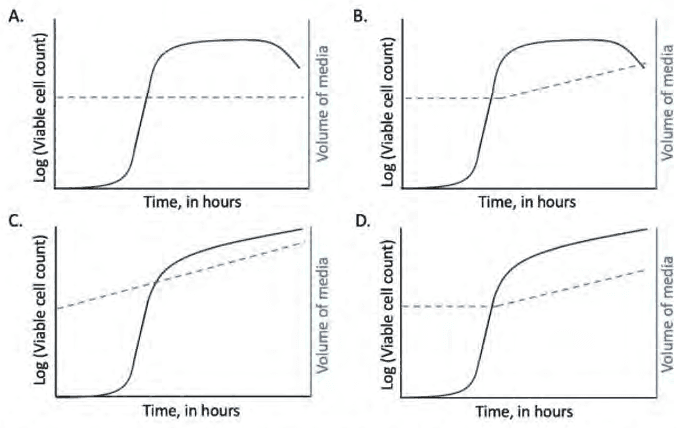
Which one of the following corresponds to the features applicable to a fed-batch mode of fermenter culture?
- 1A
- 2B
- 3C
- 4D
Show answer and solution
In fed-batch culture the fermenter starts as a batch, and then fresh medium is fed in without anything being removed, so the volume rises once feeding starts and cells keep growing well past the batch plateau. Graph D shows this. A is a simple batch, and B and C do not match fed-batch behaviour.
The trp operon can be induced by the addition of indole propionic acid (IPA), which binds to the trp repressor but does not allow the change in conformation. Upon the addition of IPA, what will be the order of the translation of the enzymes encoded by the operon?
- 1TrpA, TrpB, TrpC, TrpD, TrpE
- 2TrpE, TrpD, TrpC, TrpB, TrpA
- 3Only TrpE will be translated
- 4Only TrpA will be translated
Show answer and solution
IPA binds the Trp repressor without converting it to its DNA-binding form, so the repressor stays inactive and the operon is induced. The polycistronic mRNA is translated in gene order, TrpE, D, C, B, A.
Which one of the following properties of grooves is a hallmark of the Z-form of DNA?
- 1Narrow and deep major groove
- 2Wide and deep major groove
- 3Narrow and shallow major groove
- 4Flat major groove
Show answer and solution
In Z-DNA, a left-handed zig-zag helix, the major groove is pushed out to the surface and is essentially flat, while the minor groove is narrow and deep.
The pedigree in Panel (i) represents the inheritance pattern of a given trait. The trait is NOT 100% penetrant. Panel (ii) represents PCR amplification profile of each member of the family using a specific primer pair. (M: mother, F: father, C: child)

What is the mode of inheritance of this trait?
- 1Autosomal recessive
- 2Autosomal dominant
- 3X-linked recessive
- 4X-linked dominant
Show answer and solution
The 3 kb band marks the disease allele. Affected people carry it in one copy, alongside a normal band, so one copy is enough: a dominant trait. The unaffected but 3 kb-positive mother in family 3 shows incomplete penetrance. The affected father in family 2 shows two different allele bands, which a male could not have for an X-linked gene, so the gene is autosomal.
A 160 kDa complex of four protein molecules, consists of a dimer formed by a 25 kDa protein connected by two disulfide bonds, and three other proteins of 10, 30 and 70 kDa, respectively. It was isolated and analyzed on an SDS-PAGE gel without DTT in the gel loading dye. Which one of the following options would represent the SDS-PAGE profile?
- 1Four bands corresponding to 10, 30, 50 and 70 kDa
- 2Four bands corresponding to 10, 25, 30 and 70 kDa
- 3One band corresponding to 160 kDa
- 4Two bands corresponding to 50 kDa and 110 kDa
Show answer and solution
SDS breaks the non-covalent links between the four proteins, but without DTT the disulfide-bonded dimer stays intact at 2 × 25 = 50 kDa. The gel therefore shows four bands: 10, 30, 50 and 70 kDa.
Which one of the following is an example of parametric statistical test?
- 1Kruskal Wallis test
- 2Fisher’s exact test
- 3Unpaired t-test
- 4Wilcoxon signed rank test
Show answer and solution
A parametric test assumes a distribution, usually normal, and compares its parameters such as means. The unpaired t-test is parametric. Kruskal–Wallis, Fisher’s exact and Wilcoxon signed-rank tests are non-parametric.
Normal human fibroblasts, cancer cells (that originated in stem cells) and fibroblasts transduced with hTERT (hTERT cells) were passaged for 35 generations. Southern blot analysis was performed using DNA from above cells using radio-labelled probes for telomeric sequences. Which one of the following band patterns would be observed in the autoradiogram?
- 17-9 kb bands in fibroblasts, 18-20 kb bands in cancer and hTERT cells.
- 218-20 kb bands in fibroblasts, 7-9 kb bands in cancer and hTERT cells.
- 37-9 kb bands in fibroblasts and hTERT cells, 18-20 kb bands in cancer cells.
- 418-20 kb bands in fibroblasts and hTERT cells, 7-9 kb in cancer cells.
Show answer and solution
Normal fibroblasts lack telomerase, so their telomeres shorten with each division and are short (about 7–9 kb) after 35 passages. Cancer cells and hTERT-transduced fibroblasts have active telomerase and keep long telomeres (about 18–20 kb).
Two students performed an ELISA to determine the amount of anti-Spike antibody in serum of a Covid-19 patient. They used the same ELISA plates, the same reagents for coating, blocking and detection, and the same ELISA reader. Both generated independent standard curves of absorbance vs concentration using the same Spike protein. Student ‘A’ correctly reported a concentration of 100 μg/ml, but student ‘B’ reported 450 μg/ml. Which one of the following could most likely explain the wrong result of student ‘B’?
- 1The ELISA plate was not washed properly between coating with antigen and blocking.
- 2The ELISA plate was not washed properly after addition of sample.
- 3The slope of the standard curve generated by student B was lower than optimal.
- 4The negative control showed very little absorbance.
Show answer and solution
Everything was the same except each student’s own standard curve. If B’s curve had too low a slope (for example from degraded standards or errors in dilution), a given absorbance would read off as a much higher concentration, which overestimates the antibody. That explains reporting 450 instead of 100 µg/mL.
How many molecules of acetyl-CoA condense to produce isopentenyl diphosphate, the precursor for the formation of terpenoids by mevalonate pathway?
- 1Two
- 2Three
- 3Four
- 4Five
Show answer and solution
Two acetyl-CoA form acetoacetyl-CoA, and a third gives HMG-CoA, which is reduced to mevalonate and then converted to isopentenyl diphosphate. Three acetyl-CoA go into each IPP.
Which one of the following molecular phylogenetic trees depicts the correct relationship among invertebrates?
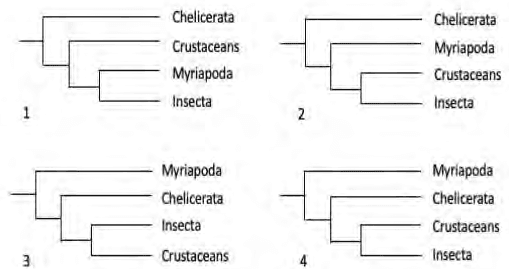
- 1Tree 1
- 2Tree 2
- 3Tree 3
- 4Tree 4
Show answer and solution
Molecular phylogenies place Chelicerata (spiders, scorpions) as the outgroup to the Mandibulata. Within that group, Myriapoda branch off first, and crustaceans and insects are sister groups (Pancrustacea): insects evolved from within crustaceans. Tree 2 shows this.
Which one of the statements about homoplasy is NOT true?
- 1It represents an independent acquisition of traits in unrelated lineages.
- 2It refers to a character shared by a set of species but not present in their common ancestor.
- 3It refers to a character state that evolved because of convergent evolution.
- 4It represents characters that are similar due to parsimony.
Show answer and solution
Homoplasy is similarity not inherited from a common ancestor: independent acquisition, convergence, parallelism or reversal (statements 1–3 are true). Parsimony is a method for building trees. It does not produce similarities, so statement 4 is false.
Which one of the following statements regarding genetics of quantitative traits in plants is INCORRECT?
- 1Loci responsible for a quantitative trait can show variations in their individual contributions to the trait.
- 2Quantitative trait loci (QTL) always have identical effects on a phenotypic trait in different environments.
- 3Recombinant Inbred Lines (RIL) populations used for QTL mapping are immortal.
- 4F2:3 families can measure both additive and dominant effects at specific QTL.
Show answer and solution
QTL effects often change with the environment (QTL × environment interaction), so they do not always have identical effects, and statement 2 is the incorrect one. Loci differ in effect size, RILs are immortal, and F2:3 families allow both additive and dominance effects to be estimated.
Which one of the following is the strongest oxidizing agent produced during photosynthesis?
- 1NADPH
- 2P680+
- 3Ferredoxin
- 4P700+
Show answer and solution
P680+, at about +1.2 V, is the strongest biological oxidant known, strong enough to pull electrons from water. P700+ is a much weaker oxidant at about +0.5 V, and NADPH and reduced ferredoxin are reductants.
The term gynodioecious species refers to plants with
- 1female flowers and hermaphrodite flowers on separate individuals.
- 2female flowers and male flowers on separate individuals.
- 3female flowers and hermaphrodite flowers on the same individual.
- 4female flowers and male flowers on the same individual.
Show answer and solution
Gynodioecy: some individuals bear only female flowers and others bear hermaphrodite flowers. Separate male and female plants is dioecy, and female plus hermaphrodite flowers on one plant is gynomonoecy.
The Ti plasmid from Agrobacterium tumefaciens has genes for auxin, cytokinin and opine synthesis while genes for opine catabolism and Vir genes lie outside the T-DNA region. Which one of the following genes are involved in providing carbon source to Agrobacterium in their ecological niche?
- 1Genes for auxin synthesis only.
- 2Genes for auxin as well as cytokinin synthesis.
- 3Genes for opine synthesis and opine catabolism.
- 4Genes for auxin synthesis as well as opine synthesis.
Show answer and solution
The T-DNA makes the plant synthesise opines, and opine-catabolism genes on the Ti plasmid, outside the T-DNA, let Agrobacterium use them as carbon and nitrogen sources. Together they make the crown gall a niche for the bacterium.
The pH of water in Lonar lake was found to be 10.5, 10.3, 10.1, 10.4, 10.7, and 10.4 for measurements taken once daily over six days. What would be the average pH of the lake water during this period?
- 110.56
- 210.26
- 310.36
- 410.46
Show answer and solution
pH is logarithmic, so the correct average comes from the [H+] values: (10−10.5 + 10−10.3 + … )/6 ≈ 4.0 × 10⁻¹¹ M, which is a pH of about 10.4. Of the options, 10.36, NTA’s answer, is the closest.
Which one of the following statements regarding the stereoisomers of D-glucose is INCORRECT?
- 1D-mannose is a C-2 epimer of glucose.
- 2D-allose is a C-3 epimer of glucose.
- 3D-galactose is a C-4 epimer of glucose.
- 4D-talose is a C-5 epimer of glucose.
Show answer and solution
Mannose (C-2), allose (C-3) and galactose (C-4) are each single-carbon epimers of glucose. D-talose differs from glucose at C-2 and C-4, so it is a C-2 epimer of galactose, not a C-5 epimer of glucose. Changing C-5 would give L-idose. Statement 4 is the incorrect one.
Which one of the following is NOT an example of programmed cell death in plants?
- 1Aerenchyma formation in cortical root cells
- 2Embryonic suspensor cell degeneration
- 3Tracheary element formation in vasculature
- 4Casparian strip formation in root endodermis
Show answer and solution
Aerenchyma formation, suspensor degeneration and xylem tracheary element differentiation all involve programmed cell death. The Casparian strip is a lignin and suberin band laid down in the walls of living endodermal cells, so it does not involve cell death.
Runaway selection was proposed by R. A. Fisher to explain the evolution of extravagant secondary sexual characters. The model is based on the exaggeration of characters in male, and female choice for these exaggerated characters. Which one of the following statements is considered an assumption of this model?
- 1Exaggeration of characters in males, and female choosiness for exaggeration are both heritable.
- 2Neither exaggeration of characters in males, nor female choosiness for exaggeration are heritable.
- 3Exaggeration of characters in males is heritable but female choosiness for exaggeration is not heritable.
- 4Exaggeration of characters in males is not heritable but female choosiness for exaggeration is heritable.
Show answer and solution
Fisher’s runaway works only if the male trait and the female preference are both heritable. They then become genetically correlated, so choosy females produce sons with the trait and daughters with the preference, and the two escalate together.
Which one of the following statements is INCORRECT?
- 1Phage Mu is used to create insertion mutations.
- 2Phage P1 is a source of Cre-LoxP recombination system.
- 3Phage M13 has single-stranded circular RNA genome.
- 4Phage ΦX174 has single-stranded circular DNA genome.
Show answer and solution
M13 has a single-stranded circular DNA genome, not RNA, so statement 3 is the incorrect one. Mu is used to make insertion mutations, P1 is the source of Cre–loxP, and φX174 has single-stranded circular DNA.
Mutations in a specific mammalian signaling pathway result in early defects observed in the establishment or maintenance of midline structures, such as the notochord and the floor plate. Later defects include the absence of distal limb structures, ventral cell types within the neural tube, spinal column and most of the ribs and cyclopia. Mutations in which one of the following signaling pathways is the most reported cause for these congenital defects?
- 1Sonic Hedgehog
- 2Wingless
- 3Notch
- 4Epidermal Growth Factor
Show answer and solution
Defects in the notochord and floor plate, loss of ventral neural cell types, absent distal limb structures, vertebral and rib defects, and cyclopia (holoprosencephaly) are the hallmark of disrupted Sonic hedgehog signalling.
Mitotic cyclin increases gradually through the G2 phase of the cell cycle but the activity of mitotic CDK1 increases suddenly at the onset of M phase. This is because
- 1active CDK1 subunit is synthesized in M phase.
- 2mitotic cyclin is sequestered in the cytosol.
- 3activation of CDK1 requires post-translational modifications.
- 4the inhibitor of CDK1 is degraded in the M phase.
Show answer and solution
Cyclin B–CDK1 builds up in G2 but is kept off by inhibitory phosphorylation (Thr14/Tyr15, by Wee1 and Myt1). At G2/M, Cdc25 removes those phosphates, and active CDK1 switches on more Cdc25 and inhibits Wee1, so activity jumps. It is post-translational modification, not new synthesis.
Natural selection can maintain genetic polymorphisms. Which one of the following CAN NOT contribute to the maintenance of polymorphisms?
- 1When the direction of selective forces is different in different environments
- 2When heterozygotes have superior fitness over homozygotes
- 3When gradients of selective forces favour different morphs
- 4When frequency-dependent selection confers an advantage to a morph which is common
Show answer and solution
Polymorphisms are maintained by selection that varies in space (1, 3), by heterozygote advantage (2), and by negative frequency dependence, which favours rare morphs. Favouring the common morph (positive frequency dependence) drives it to fixation and removes polymorphism.
Which one of the following statements is correct with respect to 95% confidence interval of the estimated mean from a set of observations?
- 1They are limits between which, in the long run, 95% of observations fall.
- 2They are a way of measuring the precision of the estimate of the mean.
- 3They are limits within which, the sample mean falls with probability 0.95.
- 4They are a way of measuring the variability of a set of observations.
Show answer and solution
A 95% confidence interval measures the precision of the estimated mean: 95% of intervals built this way would contain the true mean. It is not where 95% of the observations fall (that is measured by the SD).
A yeast strain has accumulated a mutation that makes it grow slowly. Investigation reveals that ribosomal RNA levels have dropped drastically in this strain. Which RNA polymerase is likely to be mutated in this strain?
- 1RNA Pol I
- 2RNA Pol II
- 3RNA Pol III
- 4RNA Pol IV
Show answer and solution
RNA polymerase I transcribes the large rRNA precursor (35S in yeast), which gives 25S, 18S and 5.8S rRNA. A Pol I defect sharply reduces rRNA, ribosomes and growth.
Which one of the following adrenoceptors decreases cAMP in the post-synaptic target after stimulation with norepinephrine?
- 1α1
- 2α2
- 3β1
- 4β2
Show answer and solution
α2-adrenoceptors couple to Gi, which inhibits adenylyl cyclase and lowers cAMP. α1 uses Gq, and β1 and β2 use Gs, which raises cAMP.
Which one of the following hormones is NOT exclusively synthesized from a single location in the body?
- 1Thyrotropin releasing hormone
- 2Corticotropin releasing hormone
- 3Somatostatin
- 4Somatotropin
Show answer and solution
Somatostatin is made in several places: the hypothalamus (where it inhibits GH), pancreatic δ-cells and gut D-cells. TRH and CRH come from the hypothalamus, and somatotropin (GH) from the anterior pituitary.
Loss of function mutations in snapdragon (Antirrhinum) genes CYCLOIDEA (CYC) and DICHOTOMA (DICH) will result in the
- 1conversion of bilaterally symmetric flower to a radially symmetric flower.
- 2conversion of radially symmetric flower to a bilaterally symmetric flower.
- 3conversion of bisexual flower to a male flower.
- 4conversion of bisexual flower to a female flower.
Show answer and solution
CYCLOIDEA and DICHOTOMA are expressed on the dorsal side of the Antirrhinum flower and give it bilateral symmetry. Losing both makes the flower radially symmetric (peloric).
Among the organelles listed below, which one does NOT obtain proteins via vesicular transport?
- 1Endosomes
- 2Lysosome
- 3Mitochondria
- 4Golgi
Show answer and solution
Mitochondrial proteins are made on cytosolic ribosomes and imported after translation through the TOM/TIM translocases, not delivered in vesicles. Endosomes, lysosomes and the Golgi get their proteins through vesicular traffic.
The immune recognition of “self-molecules” is important for which of the following events?
- 1Initiation of B cell activation leading to antibody production.
- 2Promoting the differentiation of hematopoietic stem cells.
- 3Recombination of the T cell receptor.
- 4Activation of natural killer (NK) cells of the innate immune system.
Show answer and solution
NK cells are restrained by inhibitory receptors (KIRs, NKG2A) that recognise self MHC class I. When infected or tumour cells lose MHC I (“missing self”), the inhibition lifts and the NK cell is activated to kill. Recognising self therefore controls NK activation.
Which one of the following gases diffuses through alveolocapillary membrane in shortest time at the resting condition?
- 1CO
- 2O2
- 3CO2
- 4N2O
Show answer and solution
Nitrous oxide is soluble and does not bind haemoglobin, so its partial pressure in the capillary blood equilibrates with alveolar gas almost immediately, within about the first tenth of the capillary transit. It is the classic perfusion-limited gas. CO is diffusion-limited because Hb takes it up so avidly.
When E. coli and macrophages are placed in a petri dish with medium, the macrophages internalize the E. coli into cytoplasmic vesicles called phagosomes, which then fuse with lysosomes where the bacteria are killed. If E. coli is replaced by M. tuberculosis in the petri dish, which ONE of the following options will happen after attachment of the bacteria?
- 1The bacteria will be internalized by pinocytosis.
- 2The bacteria will be internalized by autophagy.
- 3The bacteria will prevent the maturation of phagosomes.
- 4The bacteria will prevent the generation of lysosomes in macrophages.
Show answer and solution
M. tuberculosis is phagocytosed normally, but it then blocks phagosome maturation and fusion with lysosomes (for example by keeping Rab5 and excluding the vacuolar ATPase), so it survives in a non-acidified phagosome.
Which of the following describes ‘Empty Forest’?
- 1Absence of large trees
- 2Less species diversity due to natural reasons
- 3Habitat void of large mammals due to anthropogenic impacts
- 4Loss of habitat
Show answer and solution
“The empty forest” (Redford, 1992) is forest that looks intact from above but has lost its large mammals and birds to hunting and other human pressures. It is defaunation, not deforestation.
Part C: Life Sciences, analytical (Q71–145)
75 questions; answer any 25. Each carries 4 marks, and a wrong answer costs 1.
The statements given below indicate key characteristics of a geographical region.
- A. Contains at least 1500 species of endemic animals
- B. Contains at least 1500 species of endemic vascular plants
- C. Has lost 70% of its original natural vegetation
- D. Has lost 30% of its original natural vegetation
Which one of the following combinations represents the correct criteria for declaring an area as a biodiversity hotspot?
- 1A and C
- 2B and C
- 3A and D
- 4B and D
Show answer and solution
By the Myers/Conservation International criteria, a hotspot must have at least 1,500 endemic vascular plant species and must have lost at least 70% of its original natural vegetation.
According to ABCDE model of flower development, different combinations of MADS box proteins belonging to class A, B, C, D and E bind to each other to form a tetrameric structure referred to as “floral quartet” as given below. The floral quartet bind to DNA to activate transcription of the genes needed to specify each floral organ types.
AP1 = APETALA 1, AP3 = APETALA 3, PI = PISTILLATA, AG = AGAMOUS, STK = SEEDSTICK, SHP = SHATTERPROOF, SEP = SEPALLATA 1/2/3
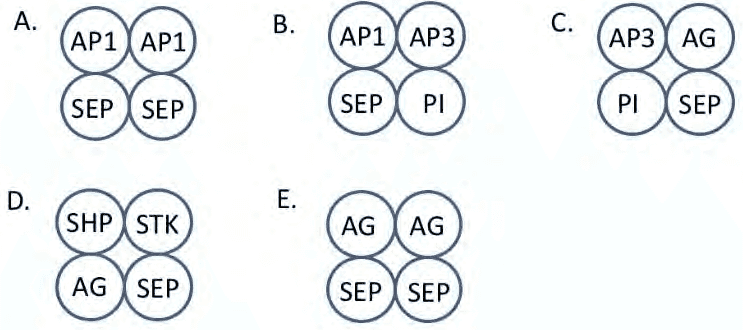
Which one of the following options represents the combination of floral quartets that specify petals and carpel whorl of flower, respectively?
- 1B and E
- 2C and D
- 3A and B
- 4D and E
Show answer and solution
In the floral quartet model, petals are specified by AP1–AP3–PI–SEP (A + B + E: quartet B). Carpels are specified by AG–AG–SEP–SEP (C + E: quartet E). Quartet C (B + C + E) gives stamens, and D (with STK and SHP) gives ovules.
The following statements are made about how CD4 T cells provide help to CD8 T cells.
- A. Antigen/MHC-II complexes on CD4 T cells interact with antigen/MHC-I complexes on CD8 cells.
- B. A single dendritic cell (DC) presents antigen on MHC-I and MHC-II at the same time.
- C. CD4 T cells activate DCs which produce chemokines like CCL3 and CCL4 that can specifically attract CD8 T cells to form a CD4-CD8-DC triad.
- D. CD4 T cells help B cells, which differentiate into plasma cells and secrete antibodies that form immune complexes which bind to FcγRs on CD8 T cells.
Which one of the following options represents the combination of all correct statements?
- 1A and B
- 2A and C
- 3B and C
- 4C and D
Show answer and solution
CD4 help for CD8 T cells usually happens on one dendritic cell presenting antigen on both MHC I and MHC II (B). Activated by CD4 cells (through CD40), the DC releases CCL3 and CCL4, which draw CCR5-expressing CD8 cells into a CD4–DC–CD8 triad (C). T cells do not present antigen to each other, so A is wrong, and D is wrong too.
The cadherin catenin complex is extremely important during compaction from a morula to the blastula. Transition of early embryonic cells into a blastula differed depending on the presence or absence of calcium ions. In addition, an investigator blocked the expression of β-catenin using vivo morpholinos to detect its effect simultaneously on compaction. Which one of the following conditions will lead to the most successful transition of the morula into the blastula?
- 1The blastula will continue to develop even when calcium ions are absent, since β-catenin will get activated automatically by cadherins.
- 2In the absence of calcium ions, calcium ionophores will assist development even when vivo morpholinos to β-catenin are introduced.
- 3Presence of calcium ions will enhance development when vivo morpholinos to cadherins have been introduced to the early embryo.
- 4Presence of calcium ions are essential for activation of cadherin and β-catenin, so that actin gets mobilized and compaction ensues.
Show answer and solution
Compaction relies on E-cadherin, which needs Ca2+ to bind, and on β-catenin linking it to actin. With calcium present and both proteins functional, cells flatten and compact, and the blastocyst forms. Without Ca2+, or with either protein knocked down, compaction fails.
A DNA sequence is given below:
5’ – ATGACGATGACGAGACGATGCAGATGATAGCAGTAGCGAATGAC – 3’
The following primers were designed to amplify the above sequence:
- A. 5’ – TACTGCT – 3’
- B. 5’ – CAGTAAG – 3’
- C. 5’ – ATGACGA – 3’
- D. 5’ – GTCATTC – 3’
- E. 5’ – TCGTCAT – 3’
- F. 5’ – GAATGAC – 3’
If we negate the effects of primer length, Tm, %GC and other factors, which one of the following options represents a combination of primers that could amplify the above DNA sequence?
- 1A and C
- 2B and D
- 3E and F
- 4C and D
Show answer and solution
The forward primer matches the 5′ end of the top strand: ATGACGA (C). The reverse primer is the reverse complement of the 3′ end (GAATGAC): GTCATTC (D). Together they point inwards across the whole sequence.
Different phases of a typical nerve fibre action potential are explained in the following statements:
- A. The membrane potential is brought to the threshold potential (firing level) due to the opening of some voltage-gated sodium channels in response to a threshold depolarizing stimulus.
- B. The rapid depolarization after the firing level is caused by opening of more voltage-gated sodium channels and entry of Na+ into the nerve fibre.
- C. The reversal of membrane potential (overshoot) at the peak of action potential occurs as membrane potential moves towards the equilibrium potential of K+.
- D. The peak voltage of action potential does not reach the equilibrium potential of K+ primarily because the increase of K+ conductance is short-lived.
Which one of the following options represents the combination of the correct statements?
- 1A and B
- 2B and C
- 3C and D
- 4A and D
Show answer and solution
Threshold is reached as the first voltage-gated Na+ channels open (A), and rapid depolarisation follows as many more open (B). The overshoot moves toward ENa, not EK (C false). The peak stops short of ENa because Na+ channels inactivate and K+ channels open (D, as stated, is wrong).
Select the statement that describes Weberian ossicles.
- 1It is found in catfish and facilitates sound transmission from the swim bladder to the inner ear.
- 2It is found in sea stars and help them in detecting surface vibrations.
- 3It is found in anurans and contributes to transmitting sound waves from the eardrum.
- 4It is found in snakes and contributes to receiving vibrations from the surroundings.
Show answer and solution
Weberian ossicles are small bones derived from the anterior vertebrae of Ostariophysi (catfishes, carps). They carry vibrations from the swim bladder to the inner ear, giving these fish acute hearing.
Male mating systems have evolved in response to female mating strategies and ecological factors that determine spatial distribution of females. In the table given below, column A represents different mating systems and column B represents different ecological conditions.
| Column A | Column B | ||
|---|---|---|---|
| P. | Resource defense polygyny | i. | Resource is abundant and occurs all over the habitat |
| Q. | Lek Mating | ii. | Resource is abundant and occurs in clumps |
| R. | Monogamy | iii. | Resource is limited and occurrence is unpredictable |
Which one of the following statements represents all correct combinations for the kind of mating system with the corresponding ecological condition?
- 1P – i; Q – ii; R – iii
- 2P – ii; Q – iii; R – i
- 3P – ii; Q – i; R – iii
- 4P – iii; Q – i; R – ii
Show answer and solution
When resources are clumped, males can defend them and so gain access to several females (resource-defence polygyny, P–ii). When resources are spread evenly, they cannot be defended, so males display at leks (Q–i). When resources are scarce and unpredictable, both parents are needed and monogamy results (R–iii).
In a plant species, the following pathways contribute to seed color. The wild type phenotype of seed color is red.

• A recessive mutation of gene A leads to white color pigment.
• A recessive mutation of gene B leads to a transparent outer layer and the color of the seed is based on the color of the endosperm.
• The two genes are present on two different chromosomes.
• Often, a yellow or white colored seed has red spots.
Based on the above information, the following statements were made:
- A. The probability of getting red colored seeds from a dihybrid cross involving two heterozygous mutants is 9/16.
- B. The mutation in gene B could have been caused by a transposable element.
- C. A plant producing red seeds would breed true for the seed color.
Which one of the following options represents a combination of all correct statements?
- 1A only
- 2B only
- 3A and B
- 4B and C
Show answer and solution
Gene B makes the red outer layer, so any B_ seed is red: 3/4 in a dihybrid cross, not 9/16 (A false). Red spots on yellow or white seeds mean somatic reversion of b in some cells, the classic sign of a transposon excising (B true). A red B_ plant may be Bb and need not breed true (C false). B only.
Fgf8 expression in the anterior developing mouse brain induces anterior identity marker expression (anteriorization). The Fgf8 receptor is uniformly expressed in the brain. Which one of the following experiments best demonstrates this fact?
- 1Transgenic overexpression of Fgf8 in the posterior of the developing mouse brain causes anteriorization at both ends of the brain.
- 2Transgenic overexpression of Fgf8 receptor in the posterior of the developing mouse brain causes anteriorization at both ends of the brain.
- 3Grafting the anterior portion of an Fgf8 null developing mouse brain into the posterior of another developing mouse brain causes the recipient’s brain to be anteriorized at both ends.
- 4Transgenic overexpression of Fgf8 in the posterior of the developing mouse brain results in no anteriorization.
Show answer and solution
If the Fgf8 receptor is present everywhere, then putting Fgf8 itself at the posterior end should anteriorise that region too, giving anterior identity at both ends. That is option 1. Overexpressing the receptor tests something else, and grafting Fgf8-null tissue cannot supply the signal.
Salicylic acid (SA) regulates hypersensitive response and effector-triggered immunity at the primary infection site and systemic acquired resistance (SAR) in the distal tissues of the plants. Which one of the following statements regarding the functionality of the Non-expressor of PR genes 1 (NPR1) in the distal tissue is correct?
- 1NPR1 exists as oligomers in the nucleus and activates hypersensitive response.
- 2NPR1 degrades through its binding to NPR3 and leads to activation of SAR response.
- 3NPR1 accumulates in the nucleus and leads to activation of SAR response.
- 4Binding with NPR4 stabilizes NPR1 in the nucleus, which in turn activates the hypersensitive response.
Show answer and solution
In distal tissues during SAR, rising salicylic acid changes the cellular redox state, so cytoplasmic NPR1 oligomers break into monomers. The monomers move into the nucleus, where they work with TGA transcription factors to switch on PR genes and SAR. NPR3 and NPR4 are SA receptors that control NPR1 turnover, and the hypersensitive response is a local reaction.
Asynchronous cultures of E. coli were grown in 14N and then shifted to 15N medium containing a chemical C (0 minute) and incubated for two generation times (i.e. 40 minutes). Proportion of hybrid DNA (14N-15N) was measured at various time-points and results are depicted in the following table.
| Time | 0 minute | 10 minutes | 20 minutes | 30 minutes | 40 minutes |
|---|---|---|---|---|---|
| Hybrid DNA | 0% | 40% | 40% | 40% | 40% |
From the data, it was concluded that the chemical C inhibits DNA replication.
Which one of the following possibilities could be the likely mode of action of chemical C?
- 1It inhibits the initiation of replication.
- 2It inhibits the elongation phase of replication.
- 3It inhibits the termination of replication.
- 4It competes with dNTPs for incorporation into the newly synthesized DNA.
Show answer and solution
After the shift, forks already under way finish their rounds and make 14N/15N hybrid DNA, which reaches 40% by 10 minutes. It then stays flat, because no new rounds start. That is the signature of blocked initiation. If elongation were blocked, even the ongoing rounds would not finish.
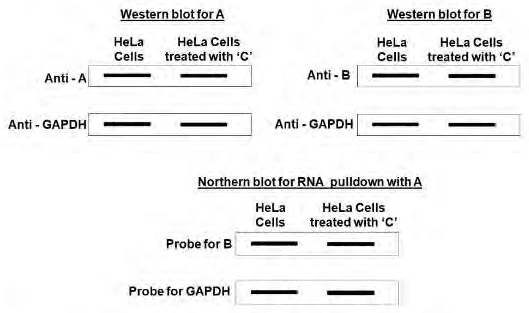
Protein A binds the mRNA for gene B in HeLa cells. The protein A mediates the formation of mRNA-protein particles (mRNPs). The addition of a chemical C disrupts mRNPs in HeLa cells. The results of the western blot and northern blot analyses are shown below:
From the above experiments, which one of the following statements is true?
- 1mRNP disruption does not affect the interaction of protein A and transcript B, or the translation of transcript B.
- 2mRNP disruption inhibits protein A interaction with transcript B but not the the translation of transcript B.
- 3mRNP disruption does not affect the interaction of protein A and transcript B, but affects the translation of transcript B.
- 4mRNP disruption promotes protein A interaction with transcript B and translation from transcript B.
Show answer and solution
Chemical C disrupts the mRNPs, yet the levels of protein A and protein B are unchanged, and A still pulls down transcript B as before. So disrupting the mRNP granules affects neither the binding of A to transcript B nor the translation of B.
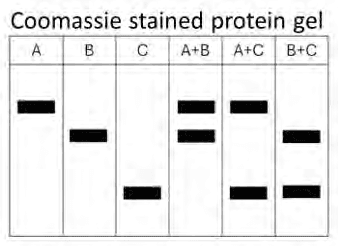
A receptor tyrosine kinase (RTK) dimerizes and autophosphorylates in presence of a ligand. A researcher prepares three constructs that express either the (A) full-length protein having a kinase domain as well as 3 tyrosine residues, (B) the RTK with a non-functional kinase domain but with the 3 tyrosine residues, and (C) the RTK lacking the 3 tyrosine residues but having a functional kinase domain. She expressed these constructs in cell lines lacking the RTK, either singly or in combinations shown in the figure, breaks open the cell and added the ligand of the RTK in presence of radio-labelled ATP. She immunoprecipitated the RTK and analysed the immunoprecipitates by Coomassie staining as shown in the figure, followed by autoradiography.
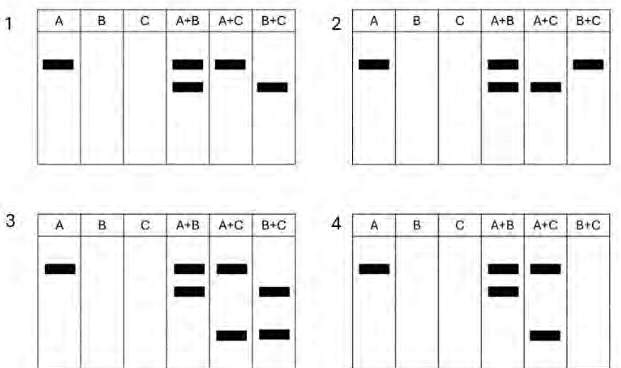
Which one of the following autoradiograms would the researcher expect?
- 1Autoradiogram 1
- 2Autoradiogram 2
- 3Autoradiogram 3
- 4Autoradiogram 4
Show answer and solution
Only A, with a working kinase and its tyrosines, can be labelled alone. In A+B, A phosphorylates itself and B’s tyrosines, so both are labelled. In A+C, C’s kinase phosphorylates A, but C has no tyrosines, so only A is labelled. In B+C, C phosphorylates B, so only B is labelled. B or C alone gives nothing. That is autoradiogram 1.
Given below are mammals and their location in India:
| Mammal | Location | ||
|---|---|---|---|
| a | Hangul | i. | Little Rann of Kutch |
| b | Golden Langur | ii. | Manas National Park |
| c | Sangai | iii. | Dachigam National Park |
| d | Wild Ass | iv. | Keibul Lamjao National Park |
Which one of the following options represents the correct match between the mammals and their locations?
- 1a-iv, b-i, c-iii, d-ii
- 2a-iv, b-iii, c-ii, d-i
- 3a-iii, b-ii, c-iv, d-i
- 4a-ii, b-iii, c-iv, d-i
Show answer and solution
The hangul (Kashmir stag) lives in Dachigam NP (a–iii). The golden langur lives in Manas NP, Assam (b–ii). The sangai (brow-antlered deer) lives in the floating phumdis of Keibul Lamjao, Manipur (c–iv). The Indian wild ass lives in the Little Rann of Kutch (d–i).
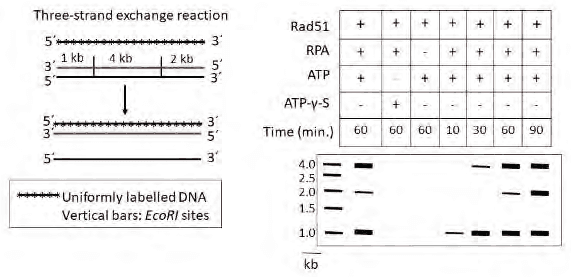
A uniformly labelled (32P) single-stranded DNA (ssDNA) was incubated with a homologous double-stranded DNA (dsDNA) in the presence of Rad51 and/or RPA along with ATP or the non-hydrolysable ATPγS to study a three-strand exchange reaction. The reactions were terminated at various time points, DNA were digested with EcoRI followed by electrophoresis and autoradiography. Results are shown in the figure below.
Based on the above data, which one of the following statements is INCORRECT?
- 1Rad51 requires ATP hydrolysis for strand exchange reaction.
- 2Strand exchange does not take place in the absence of RPA.
- 3The polarity of strand-exchange reaction is in the 3′ to 5′ direction.
- 4The rate of strand-exchange is 7 kb/hour.
Show answer and solution
Labelled single-strand fragments are released from the 1 kb end at 10 minutes, the 4 kb middle by 30 minutes and the 2 kb end by 60 minutes. Exchange therefore runs 5′→3′ along the single strand, not 3′→5′, so statement 3 is the incorrect one. The whole 7 kb is exchanged in about an hour, and the reaction needs RPA and hydrolysable ATP.
The glomerular ultrafiltration coefficient (Kf) can be changed by the mesangial cells producing a decrease in Kf largely due to a reduction in the area available for filtration. The following statements are made about some agents that affect the mesangial cells.
- A. Norepinephrine causes contraction of mesangial cells.
- B. Angiotensin II causes relaxation of mesangial cells.
- C. Histamine causes relaxation of mesangial cells.
- D. Atrial natriuretic factor (ANF) causes relaxation of mesangial cells.
Which one of the following options represents combination of all correct statements?
- 1A and B
- 2B and C
- 3C and D
- 4A and D
Show answer and solution
Mesangial cells contract in response to noradrenaline, angiotensin II, histamine, endothelin and vasopressin, reducing filtration area and Kf. They relax in response to ANP, dopamine and cAMP. So A and D are correct, while B and C have the effect reversed.
The following four DNA oligos are mixed in equimolar concentration, heated to 95°C, and slowly annealed in a microcentrifuge tube.
5’ GCG GGA ATT TA 3’
5’ GCC TAC TCC CGC 3’
5’ CGA TGG GTA GGC 3’
5’ TAA ATC CAT CG 3’
Which of the following secondary structures will predominantly be present?
- 1Two separate B-forms of double-stranded DNA structures
- 2Four individual stem-loop DNA structures
- 3Two separate Z-forms of double-stranded DNA structures
- 4A four-stranded Holliday junction
Show answer and solution
Each oligo’s first half pairs with one partner and its second half with another (for example GCGGGA with TCCCGC, and AATTTA with TAAAT…). The four strands therefore cross-pair into a four-way (Holliday) junction rather than two separate duplexes.
Following are the different critical reaction steps involved in the oxidation of lipids in many organisms.
- A. Reaction of fatty acyl-CoA with carnitine
- B. Thiolysis
- C. Hydrolysis of triacylglycerol by lipase
- D. Activation of fatty acid by conjugating to CoA
- E. Hydration
Choose the correct sequence of reaction steps in ascending order.
- 1C – D – A – E – B
- 2C – E – D – A – B
- 3E – D – A – C – B
- 4D – E – B – C – A
Show answer and solution
Lipase first frees fatty acids from triacylglycerol (C). They are activated to acyl-CoA (D), transferred to carnitine to enter the mitochondrion (A), and then go through β-oxidation: dehydrogenation, hydration (E), oxidation and finally thiolysis (B). Order: C, D, A, E, B.
Given below are a list of sub-cellular compartments (Column X) and markers (Column Y).
| Column X: Subcellular compartments | Column Y: Markers | ||
|---|---|---|---|
| A | Endoplasmic reticulum | i | LC3b |
| B | Golgi apparatus | ii | HSP60 |
| C | Autophagosome | iii | Protein disulphide isomerase |
| D | Mitochondria | iv | Mannosidase II |
Which one of the following options correctly matches the subcellular compartments with their markers?
- 1A-iii, B-iv, C-i, D-ii
- 2A-iv, B-iii, C-ii, D-i
- 3A-iii, B-iv, C-ii, D-i
- 4A-ii, B-iv, C-i, D-iii
Show answer and solution
Standard markers: protein disulfide isomerase for the ER (A–iii), mannosidase II for the medial Golgi (B–iv), lipidated LC3B for autophagosomes (C–i), and the matrix chaperone HSP60 for mitochondria (D–ii).
Single-stranded DNA binding properties of three DNA repair proteins (A, B, and C) were investigated. A biotinylated single-stranded DNA was prepared and incubated with the proteins in different combinations as shown below. This was followed by streptavidin pull-down to enrich ssDNA-bound proteins, which were detected by western blot analyses using specific antibodies.
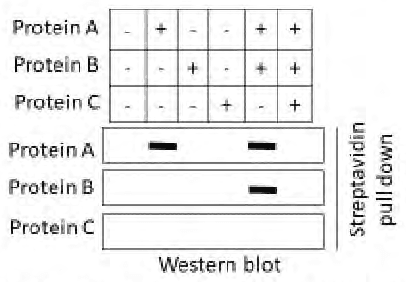
Which one of the following statements is NOT a correct conclusion from the above study?
- 1Protein A binds to the ssDNA.
- 2Protein B does not bind to ssDNA.
- 3Protein C destabilizes the binding of protein A to ssDNA.
- 4Protein C interacts with protein A but not with protein B.
Show answer and solution
A binds the ssDNA directly, and B is pulled down only when A is present, so B binds through A. Adding C removes both A and B from the DNA, so C destabilises A’s binding. Nothing in the data shows whether C physically binds A and not B, so statement 4 cannot be concluded.
Given below is a list of regulatory RNAs (Column X) and their modes of action (Column Y).
| Column X: Regulatory RNA | Column Y: Mechanism for the control of gene expression | ||
|---|---|---|---|
| A. | Riboswitch | i. | Base-pairing with specific mRNAs and controlling their stability and their translation. |
| B. | MicroRNA (miRNA) | ii. | Change their conformation when bound to small molecules, usually metabolites. |
| C. | Small interfering RNAs (siRNAs) | iii. | Complementary base pairing followed by RISC-mediated mRNA cleavage. |
Which one of the following options represents all correct matches between Column X and Column Y?
- 1A-ii, B-i, C-iii
- 2A-i, B-ii, C-iii
- 3A-iii, B-i, C-ii
- 4A-iii, B-ii, C-i
Show answer and solution
Riboswitches change shape when a metabolite binds (A–ii). miRNAs pair imperfectly with target mRNAs and control their stability and translation (B–i). siRNAs pair perfectly and guide RISC (Argonaute) to cleave the mRNA (C–iii).
DELLA proteins are known to interact with phytochrome interacting factors (PIFs) and regulate genes involved in etiolation in Arabidopsis. Following are certain statements regarding the function of DELLAs under dark and light conditions:
- A. In dark, high level of gibberellic acid (GA) helps DELLAs to directly bind to PIFs.
- B. During light, the level of GA goes down and helps DELLA-PIF complex to bind to the promoters of the etiolation responsive genes.
- C. Binding of DELLA proteins to PIFs prevents the transcription of PIF-induced genes, leading to photomorphogenesis.
- D. Skotomorphogenesis is due to the degradation of DELLA proteins and binding of the PIFs to the etiolation responsive genes.
Which one of the following options represents the combination of all correct statements?
- 1A and C
- 2B and D
- 3A and B
- 4C and D
Show answer and solution
DELLA proteins bind PIFs and stop them binding DNA, which blocks PIF-driven, etiolation genes (C). In the dark, GA levels are high, so DELLAs are degraded and free PIFs drive skotomorphogenesis (D). A has GA’s role reversed, since GA destroys DELLAs, and B is wrong too.
Protein phosphatase 2A (PP2A) is a critical regulator of Cdk1 substrates during the cell cycle. The B55 subunit of PP2A influences the substrate selectivity, localization, and regulation of the enzyme. Given below are a few statements about PP2A and its regulation during the M-phase of the cell cycle.
- A. PP2A-B55 activity is high during interphase but inhibited during early mitosis when M-Cdk activity rises.
- B. M-Cdk1 turns off PP2A-B55 via the phosphorylation of an intermediary protein kinase called Greatwall.
- C. M-Cdk1 turns on PP2A-B55 via the phosphorylation of an intermediary protein kinase called Greatwall.
- D. When anaphase is initiated and M-Cdk1 activity declines, PP2A-B55 promotes dephosphorylation of Cdk1 substrates
Which one of the following combinations represents all the correct statements?
- 1A, B, and D
- 2A, C, and D
- 3C and D only
- 4A and B only
Show answer and solution
PP2A-B55 is active in interphase. At mitotic entry, Cdk1 activates the kinase Greatwall, which phosphorylates ENSA/ARPP19, and these then inhibit PP2A-B55, so Cdk1 substrates stay phosphorylated (A, B). As Cdk1 falls at anaphase, Greatwall goes off, PP2A-B55 returns, and it dephosphorylates Cdk1 substrates (D).
The following statements refer to mechanisms that may confer resistance to antibiotics in bacteria.
- A. Enzymes that can break down the antibiotic.
- B. Efflux systems to pump out the antibiotic.
- C. CRISPR-mediated defence against the antibiotic.
- D. Antitoxins that can sequester the antibiotic.
- E. Cell wall modification.
Which one of the following options represent the combination of all correct statements?
- 1A, B and E only
- 2A, B and C only
- 3A, B, C and D
- 4A, B, C and E
Show answer and solution
Bacteria resist antibiotics by inactivating enzymes such as β-lactamases (A), by efflux pumps (B), and by modifying their cell wall or other targets, as in MRSA’s PBP2a and vancomycin resistance (E). CRISPR defends against phages and plasmids, not drugs, and antitoxins neutralise their own protein toxins.
The feedback control of the branched amino acid biosynthesis pathway in Arabidopsis is given below. The activity of Acetohydroxyacid Synthase (AHAS) enzyme is feedback inhibited by Leucine and Valine synergistically, whereas Isopropyl malate synthase (IPMS) enzyme activity is inhibited by Leucine only. Feedback resistant mutant lines of AHAS and IPMS genes are ahas2-1D and ipms1-1D, respectively.
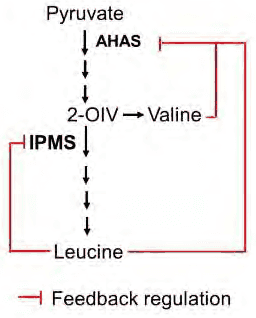
The phenotype of these feedback resistant mutants was analyzed by growing them in the following Murashige and Skoog (MS) medium combinations.
- A. MS medium only
- B. MS medium supplemented with Leu only
- C. MS medium supplemented with Val + Leu
- D. MS medium supplemented with Val only
Which one of the following statements is correct?
- 1ahas2-1D will grow in (C) only, and ipms1-1D will grow in (B) only.
- 2ahas2-1D will grow only in (D) and ipms1-1D will grow in both (A) and (B).
- 3ahas2-1D will grow in both (A) and (C) and ipms1-1D will grow in both (A) and (B).
- 4Both ahas2-1D and ipms1-1D mutants will grow in (A) only.
Show answer and solution
Wild-type plants are starved of isoleucine when Val and Leu together shut down AHAS. The feedback-resistant ahas2-1D grows on MS alone and on Val + Leu (A, C). The feedback-resistant ipms1-1D keeps making Leu and grows on MS alone and with Leu (A, B).
Different leads used in electrocardiography (Column X) and the electrode placement and connections (Column Y) are listed below:
| Column X: ECG leads | Column Y: Electrode placement and connections | ||
|---|---|---|---|
| a | Standard limb lead I | i | Left leg – positive; Right arm – negative |
| b | Standard limb lead II | ii | Left leg – positive; Left arm – negative |
| c | Standard limb lead III | iii | Right arm – positive; Left arm and left leg connected together – negative |
| d | Augmented limb lead aVR | iv | Left arm – positive; Right arm – negative |
Which one of the following options represents the correct match between Column X and Column Y?
- 1a-i, b-ii, c-iii, d-iv
- 2a-ii, b-iii, c-iv, d-i
- 3a-iii, b-iv, c-i, d-ii
- 4a-iv, b-i, c-ii, d-iii
Show answer and solution
Lead I: left arm positive, right arm negative (a–iv). Lead II: left leg positive, right arm negative (b–i). Lead III: left leg positive, left arm negative (c–ii). aVR: right arm positive against the combined left arm and left leg (d–iii).
Given below are a few statements related to inheritance biology.
- A. Quantitative traits are characterized by discontinuous variations in the phenotype.
- B. Polygenic traits never show a normal distribution of phenotypic variability.
- C. Association mapping captures wider genetic diversity than biparental linkage mapping.
- D. Bulked segregant analysis can be used for mapping of monogenic qualitative traits.
Which one of the following options represents a combination of all correct statements?
- 1A and C
- 2B and D
- 3A and B
- 4C and D
Show answer and solution
Association mapping uses diverse germplasm and historical recombination, so it captures more diversity than a two-parent cross (C). Bulked segregant analysis works well for monogenic qualitative traits (D). Quantitative traits vary continuously, and polygenic traits are often normally distributed, so A and B are false.
The mutation rate refers to the frequency at which new mutations arise in the genome of an organism and is typically expressed as:
Mutation rate = Number of observed mutations / Total number of opportunities for mutations
Which one of the following factors will NOT influence the opportunities for mutations?
- 1Generation time
- 2DNA repair efficiency and replication fidelity
- 3Exposure to mutagens
- 4Population size
Show answer and solution
Opportunities for mutation are the replications or generations per unit time, which depend on generation time, and they are affected by fidelity, repair and mutagen exposure. Population size changes how many mutations arise in the whole population, but not the rate per genome per replication.
Following statements were made for the production of cisgenic plants.
- A. In cisgenics, the donor sequence does not necessarily replace the native gene sequence but is added to the recipient species.
- B. Cisgenic plants might contain DNA sequences such as T-DNA borders from the plasmid vector.
- C. Insertion of a cisgene may result in a gene mutation at the site of insertion similar to that of transgenics.
- D. With regard to the species gene pool, cisgenesis does not alter the gene pool of the recipient species.
- E. Both cisgenesis and transgenesis can use the same DNA transformation methods to introduce the respective gene constructs into the recipient plants.
Which one of the following options represents the combination of all correct statements?
- 1B, C and E only
- 2A and D only
- 3A, C, D and E only
- 4A, B, C, D and E
Show answer and solution
All five are correct. A cisgene comes from the same species or a crossable relative and is added to the genome (A). Vector sequences such as T-DNA borders may remain (B). Random insertion can disrupt a gene, just as with transgenes (C). The species’ gene pool is unchanged (D). The same transformation methods are used (E).
The table below represents a list of geographical regions and avian fauna.
| Geographical region | Avian fauna | ||
|---|---|---|---|
| a. | Western Himalayas | i. | Rufous babbler |
| b. | Western Ghats | ii. | Narcondam hornbill |
| c. | Peninsular India | iii. | Red crossbill |
| d. | Andaman-Nicobar Archipelago | iv. | Yellow-throated bulbul |
Which one of the following options represents the combination of all correct matches:
- 1a-ii, b-iv, c-iii, d-i
- 2a-i, b-iii, c-ii, d-iv
- 3a-ii, b-iii, c-iv, d-i
- 4a-iii, b-i, c-iv, d-ii
Show answer and solution
The red crossbill lives in the western Himalayan conifer forests (a–iii). The rufous babbler is endemic to the Western Ghats (b–i). The yellow-throated bulbul lives on the rocky hills of peninsular India (c–iv). The Narcondam hornbill lives only on Narcondam Island in the Andamans (d–ii).
Stable coexistence is possible in a classical two-species Lotka-Volterra competition model when
- 1intraspecific competition is stronger than interspecific competition.
- 2intraspecific competition is weaker than interspecific competition.
- 3inter- and intra-specific competitive effects are balanced.
- 4interspecific effects are offset by demographic stochasticity.
Show answer and solution
Two Lotka–Volterra competitors coexist stably only when each one limits its own growth more than it limits the other’s: intraspecific competition stronger than interspecific. Otherwise one species excludes the other.
Eukaryotic transcription factors TF1 and TF2 bind to independent cis regulatory elements (Cis1 and Cis2, respectively) upstream of TATA box and positively regulate gene expression. Histone modifier 1 (HM1) binds to TF1 but not to TF2. In order to determine how genes are regulated by these three factors, an in vitro transcription and translation assay was set up. A packaged DNA containing region from Cis1 to Cis2, along with eukaryotic minimal promoter fused upstream of a luciferase gene, was purified. The luciferase activity, upon addition of a combination of TF1, TF2 and/or HM1, in presence of RNA polymerase and translation mix is plotted below.
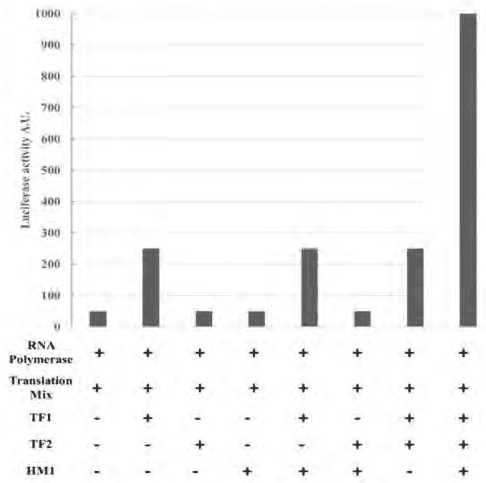
Which one of the following models best represents the results above?
- 1TF2 activates luciferase expression independent of TF1 and HM1.
- 2HM1 activates binding of either of TF1 or TF2 to their cognate Cis elements to activate luciferase expression.
- 3TF1 binds to Cis1, recruits HM1 to modify DNA allowing TF2 to bind Cis2 to enhance luciferase expression.
- 4TF2 binds to Cis2, recruits HM1 to modify DNA allowing TF1 to bind Cis1 to activate luciferase expression.
Show answer and solution
TF1 alone raises luciferase five-fold, while TF2 alone and HM1 alone do nothing. TF1 + HM1 is no better than TF1 alone, but TF1 + HM1 + TF2 gives about 1,000 units. So TF1 binds Cis1 and brings in HM1, whose modification then lets TF2 bind Cis2 and boost expression further.
A region of a eukaryotic chromosome is heavily transcribed by RNA polymerase-II. Given below are a few properties of such a chromatin.
- A. DNaseI hypersensitivity
- B. High CpG methylation
- C. Occupied by macroH2A
- D. High histone acetylation
Choose the option that has all correct properties.
- 1A and C only
- 2C and D only
- 3A, B and D
- 4A and D only
Show answer and solution
Actively transcribed chromatin is open, so it shows DNase I hypersensitivity (A), and it carries high histone acetylation (D). High CpG methylation and the histone variant macroH2A mark silent chromatin.
The following graphs represent the effect of two environmental conditions (E1 and E2) resulting in two optimal phenotypes (OE1 and OE2) for their respective environmental conditions.
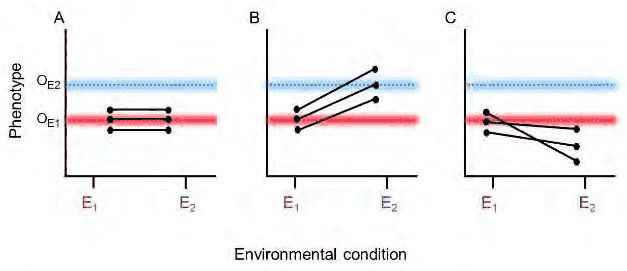
Which one of the options represents phenotypic plasticity?
- 1A only
- 2B only
- 3B and C
- 4A and B
Show answer and solution
Phenotypic plasticity means a genotype’s phenotype changes with the environment, shown as sloped reaction norms (B, C). In A the lines are flat, so the phenotype does not change with conditions. In B the change is adaptive, towards the optimum in E2, and in C it is not, but both are plasticity.
The phylogenetic tree given below shows single nucleotide polymorphisms observed among four individuals of the scorpion species Deccanometrus bengalensis.
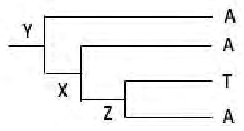
Select the option that represents the correct combination of ancestral nucleotides at nodes X, Y and Z using the principle of parsimony.
- 1Y : A, X : A, Z : A
- 2Y : A, X : A or T, Z : A or T
- 3Y : A, X : A, Z : A or T
- 4Y : A or T, X : A or T, Z : A or T
Show answer and solution
Three of the four tips are A and one is T. The fewest changes come from assigning A at the root Y and at X (both have A on each side), with one change to T on the branch to that tip. At Z, joining T and A, either state costs one change, so Z is A or T.
The figure summarizes the observation following a cross between two haploid strains of Neurospora crassa having alleles A and a, respectively.
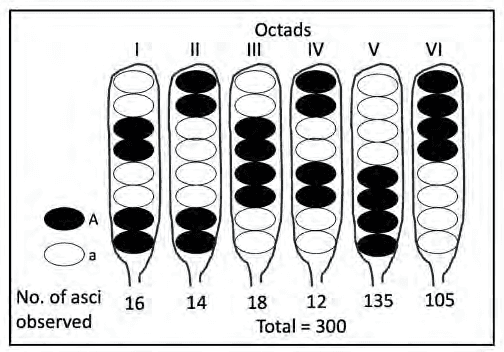
The following statements were made:
- A. In ‘I’, segregation of alleles occurred in Anaphase II.
- B. Crossing over between the centromere and the gene occurred in 20% of the meiocytes.
- C. With reference to the two non-recombinant parental chromosomes, there are 6 different ways by which they can orient themselves at the equatorial plate.
- D. The gene is 20cM away from the centromere.
Which one of the following options represents a combination of all correct statements?
- 1A and B only
- 2B and C only
- 3C and D only
- 4B, C and D
Show answer and solution
Octads I–IV show second-division (MII) segregation: 16 + 14 + 18 + 12 = 60 of 300 asci, so a crossover between the gene and the centromere occurred in 20% of meiocytes (B). The gene–centromere distance is half that, 10 cM, not 20 (D is false). NTA’s key accepts B and C.
The following experimental manipulations were carried out with Xenopus embryo.
Manipulation X: Exposure to ultra violet radiation leading to the failure of cortical rotation.
Manipulation Y: Gastrulae treated with lithium chloride, an agonist of canonical Wnt signaling.
The following statements were made with respect to the above manipulations and genes involved in setting up dorso-ventral polarity in amphibians.
- A. The phenotype obtained due to manipulation X can be rescued by injection of noggin in 1-cell embryo
- B. Chordin mRNA will be enriched in embryos of manipulation X as compared to those of manipulation Y
- C. Injection of cDNA for chordin into ventral blastomeres leads to the induction of a secondary axis.
- D. Experimentally depleting β-catenin transcripts in 1-cell embryo by antisense oligonucleotides leads to phenotype similar to that obtained from manipulation X.
Which one of the following options represents all correct statements?
- 1A, C and D
- 2B, C and D
- 3A and B only
- 4B and C only
Show answer and solution
A is true: noggin rescues UV-ventralised embryos. C is true: chordin in ventral cells induces a second axis. D is true: depleting β-catenin mimics UV ventralisation. B is false: UV embryos have less chordin, whereas lithium-treated (dorsalised) embryos have more. A, C and D.
To test the lever-arm model of myosin movement, an investigator utilizes recombinant DNA technology to attach myosin head to various length of neck domains. In the schematics shown below (1-4), the y-axis represents the velocity of myosin in μm/sec on the actin filament, and the x-axis shows the recombinant myosins (a-d; shown on the left) that were utilized to calculate the velocity. Considering that all the appropriate conditions were applied to estimate the velocity of recombinant myosin, choose the graph that correctly represents the velocity of recombinant myosin.
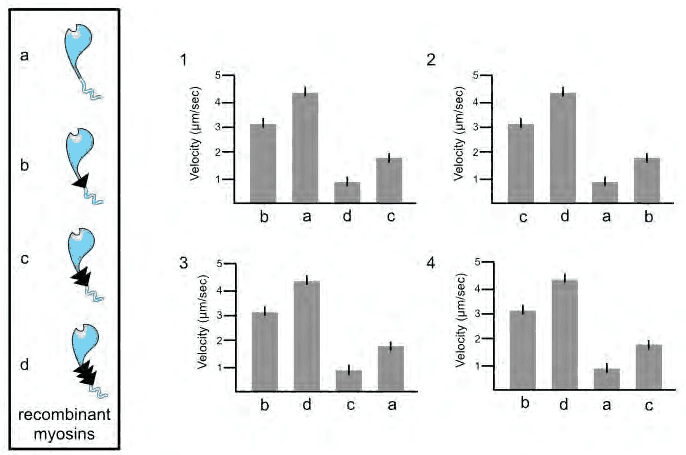
- 1Graph 1
- 2Graph 2
- 3Graph 3
- 4Graph 4
Show answer and solution
In the lever-arm model, myosin’s step size, and hence its speed, increases with neck length, that is, the number of light-chain-binding IQ motifs. Longest neck fastest: d > c > b > a, which matches graph 2.
The surface electrostatic potential map of an 18 kDa protein is shown below. Shades of blue and red on the surface denote positively and negatively charged surfaces, respectively.
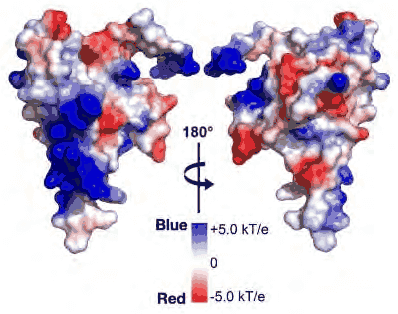
Which one of the options represents the most likely natural substrate/s for the protein?
- 1Fatty acids and cellulose
- 2DNA and RNA
- 3DNA and cellulose
- 4Only cellulose
Show answer and solution
The surface is strongly positively charged (blue), which suits binding the negatively charged phosphate backbone of DNA and RNA. Cellulose and fatty acids carry no such charge pattern.
Five different strains of Salmonella (1, 2, 3, 4, 5) which can utilize lactose (Lac+) as the sole carbon source but cannot synthesize arginine (Arg−) are mixed with five other strains (6, 7, 8, 9, 10) that cannot utilize lactose (Lac−) and can make arginine (Arg+). These strains are mixed in all possible combinations and plated on appropriate plates to get Lac+ Arg+ recombinants. The following results were obtained, where H represents ‘high numbers of recombinants’, L refers to ‘low numbers of recombinants’ and O represents ‘no recombinants’.
| Strain No. | 1 | 2 | 3 | 4 | 5 |
|---|---|---|---|---|---|
| 6 | H | O | O | H | L |
| 7 | H | O | O | H | L |
| 8 | O | H | H | O | O |
| 9 | O | L | L | O | O |
| 10 | O | H | H | O | O |
On the basis of these results, the sex type (either Hfr, F+ or F−) to each of these strains was assigned.
- A. Strains 2,3,6,7 are F−
- B. Strains 2,3,5,6,7,9 are F−
- C. Strains 1,4,8,10 are F+
- D. Strains 1,4,8,10 are Hfr
Which one of the following options represents a combination of all correct statements?
- 1A and C
- 2A and D
- 3B and C
- 4B and D
Show answer and solution
H×F− crosses give many recombinants, F+×F− crosses few, and same-type crosses none. Strains 1, 4, 8 and 10 give H with some partners, so they are Hfr, and 2, 3, 6 and 7 are their F− partners. Strains 5 and 9 give only L, so they are F+. A and D.
Consider a species of group-living bird in which individuals produce alarm calls to alert group members of the presence of a predator. The alarm call confers fitness benefits to the caller as it helps group members (composed of genetic relatives) escape the predator. However, alarm calling also makes the caller more conspicuous to the predator. Individuals of this species in a population have four phenotypes for the loudness of alarm calls they produce in the order P < Q < R < S. The graph below gives the cost and benefit functions for alarm calling behaviour for the four phenotypes.
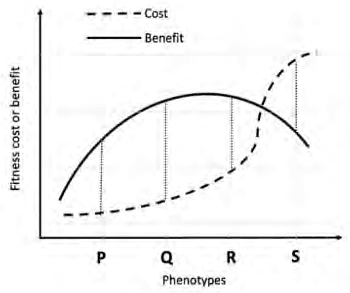
Which one of the following phenotype frequencies represents the correct outcome of natural selection?
- 1Phenotype frequency: P = Q = R < S
- 2Phenotype frequency: S > R > Q > P
- 3Phenotype frequency: Q > (P = R) > S
- 4Phenotype frequency: Q > P = R = S
Show answer and solution
Selection favours the phenotype with the largest net benefit (benefit minus cost). The gap is greatest at Q, equal and smaller at P and R, and negative at S, where cost exceeds benefit. So Q > P = R > S.
A tree grows at 0.5 meter per day under optimal tropical conditions. Assuming the stem consists entirely of cellulose fibers, how many D-glucose residues must be added per second to reach the above growth rate? The length of D-glucose in cellulose is about 0.45 nm.
- 11200-1300 residues
- 212800-12900 residues
- 3120800-120900 residues
- 42800-2900 residues
Show answer and solution
0.5 m per day = 0.5 × 10⁹ nm ÷ 86,400 s ≈ 5,787 nm/s. Each glucose adds 0.45 nm, so 5,787/0.45 ≈ 12,860 glucose residues per second, per cellulose chain.
Wild-type Drosophila have a pair of wings on one segment and a pair of halteres on the adjacent posterior segment. Wild type four-winged insects like dragonflies do not have halteres. Ultrabithorax (Ubx) is a homeobox gene. Ubx mutants of Drosophila have two pairs of wings and no halteres. In relation to Ubx function, the two-winged and four-winged insect species differ based on
- 1Ubx expression levels in segments that give rise to wings/halteres.
- 2Ubx regulation at different developmental times in segments that give rise to wings/halteres.
- 3targets of Ubx in segments that give rise to wings/halteres.
- 4Ubx copy number and paralog evolution.
Show answer and solution
Ubx is expressed in the third thoracic segment of both flies and four-winged insects such as butterflies and dragonflies. The difference lies in which target genes Ubx regulates there. In flies it represses wing-patterning genes and makes a haltere, while in four-winged insects those targets do not respond.
The following statements describe possible nomenclature rules for plants and animals.
- A. A plant and an animal cannot bear the same binomial latin name.
- B. The valid name of a taxon is the oldest available name that has been applied to it and which is validly published.
- C. A species may not be removed from a genus once described.
- D. Only a single specimen ‘holotype’ acts as the primary “name bearer” for any species.
Select the option that contains all accepted statements about nomenclature rules.
- 1A and B
- 2B and D
- 3C and D
- 4A and C
Show answer and solution
Under priority, the valid name is the oldest validly published name (B). The holotype is the single name-bearing type when the author designates one (D). A is false: plant and animal names are governed by separate codes and may coincide. C is false: species are often moved between genera.
A cross was made between wild type female Drosophila melanogaster and mutant males which are yellow bodied (y) and crossveinless (cv). The two genes are present on the X-chromosome. The F1 progeny was sib-mated and the observation of F2 progeny is tabulated below.
| Phenotype | No. of male progeny | No. of female progeny |
|---|---|---|
| wild type | 45 | 100 |
| yellow body and crossveinless | 40 | 0 |
| yellow body | 6 | 0 |
| crossveinless | 9 | 0 |
| Total no. of progeny analyzed = 200 |
With regard to the above analysis, which one of the following statements is correct?
- 1The genetic distance between the two genes is 7.5 cM.
- 2If the mapping was done with a 3rd marker which lies between y and cv, the genetic distance is likely to increase, but never decrease.
- 3If a larger progeny size was analyzed, more double crossovers will be identified leading to decrease in the genetic distance.
- 4If a reciprocal parental cross was carried out, no recombinants would be observed in the F2 progeny as there is no crossing over in D. melanogaster males.
Show answer and solution
F1 females carry + + on one X and y cv on the other, so the recombination frequency is read from their F2 sons: (6 + 9)/100 = 15%, or 15 cM, not 7.5. Adding a marker between y and cv lets double crossovers be detected and counted, so the estimate can only rise, never fall (option 2).
Results of immunoprecipitation (IP) of HA-Yfg are shown below.

Given below are options of controls that could be used to confirm that F1β actually associates with HA-Yfg.
- A. Include a lane where α-HA is not added but Protein A-Sepharose is added
- B. Include a lane where neither α-HA nor Protein A-Sepharose are added
- C. Include a lane where α-HA is added but Protein A-Sepharose is not added
- D. Include a lane where α-Myc is added instead of α-HA before addition of Protein A-Sepharose.
Which one of the following options represent(s) the most appropriate control(s)?
- 1A only
- 2A and B
- 3A and D
- 4C and D
Show answer and solution
To show that F1β is pulled down specifically with HA-Yfg, the controls must show it does not stick to the beads alone and does not come down with any antibody. So run beads without anti-HA (A) and an irrelevant antibody such as anti-Myc with the beads (D).
Mutants of bacteriophage that carry deletions can be used to rapidly locate mutational sites of newly obtained mutants. The mapping is based on whether wild type recombinants can be recovered when the deletion mutant and the novel mutant are brought together.
Four independent deletions (1 to 4) of a region were used to map 4 novel mutations (A to D).
The deletions (starting from a fixed site) are shown below (the lines denote the region of deletion):

The results of mapping are summarized in the table, where ‘+’ denotes the recovery of wild type recombinants and ‘–’ the inability to do so.
| Deletion | A | B | C | D |
|---|---|---|---|---|
| 1 | – | + | + | + |
| 2 | – | + | + | – |
| 3 | – | – | + | – |
| 4 | – | – | – | – |
Further it was observed
• that out of the 4 novel mutants no revertant was observed for mutant A
• mutant B and C do not complement each other
The following conclusions were made:
- A. Mutation A lies within the region of deletion 1.
- B. Mutations can be ordered as A-D-B-C.
- C. Mutant A could be a deletion.
- D. Mutants B and C are located on 2 independent cistrons.
Which one of the following options represents a combination of all correct statements?
- 1A, B and C
- 2B, C and D
- 3A, C and D
- 4A and B only
Show answer and solution
Mutation A is covered by every deletion, including the smallest, so it lies within deletion 1 (A true). D first becomes uncovered beyond deletion 1, then B, then C, so the order is A–D–B–C (B true). A never reverts, which suggests it is itself a deletion (C true). B and C fail to complement, so they are in the same cistron (D false). A, B and C.
In a population with density-dependent effects on births and deaths due to intraspecific competition, the net recruitment curve is dome-shaped because
- 1density-dependence is lowest at intermediate density.
- 2of undercompensating density-dependence and population size at intermediate density.
- 3death rates are lowest at low density.
- 4mortality rates are density-independent at intermediate density.
Show answer and solution
Net recruitment (births minus deaths) is low at low density because there are few breeders, and low near K because density dependence is strong. It is highest at intermediate density, where density dependence is undercompensating and the population is still large enough to produce many recruits. That gives the dome shape.
A researcher wants to stitch two fragments of DNA, “A” and “B” (shown in the figure below), using PCR. She uses primer pairs “a” and “b” to amplify DNA “A”. Thereafter, she mixes equal concentrations of PCR amplified “A” and DNA “B” to set up a PCR using primers “ a’ ” and “c”.
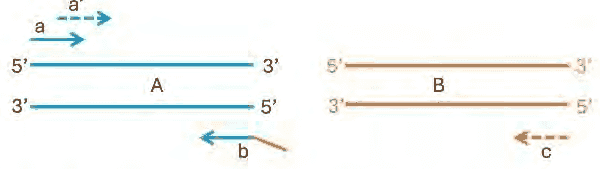
The plus strand sequences of the two DNA fragments are given below (“….” stands for any of the four nucleotides):
A: 5’-AGAGAGAGAGAGAGAG……………GAGAGAGAGAGAGAGAGAGAG – 3’
B: 5’-AGCTTGCATGCCTGCAGGTCGACT……………TAGACGATGA – 3’
Which one of the following options represents the correct sequence of primer “b”?
- 15’-CTCTCTCTCTCTCTCTCTTCGAACGTACGGACGTCCAGCTGA-3’
- 25’-AGTCGACCTGCAGGCATGCAAGCTTCTCTCTCTCTCTCTC-3’
- 35’-AGCTTGCATGCCTGCAGGTCGACTCTCTCTCTCTCTCTCTC-3’
- 45’-AGTCGACCTGCAGGCATGCAAGCTGAGAGAGAGAGAGAG-3’
Show answer and solution
To stitch A to B, primer b (the reverse primer for A) must carry a 5′ tail matching the start of B. Its sequence is the reverse complement of B’s first bases (AGCTTGCATG…GTCGACT, which gives AGTCGACCTGCAGGCATGCAAGCT) followed by the reverse complement of A’s 3′ end (CTCTC…). That is option 2.
Following statements have been made about vaccines.
- A. Covaxin is a killed cell vaccine and Corbevax is a subunit vaccine.
- B. Oral polio vaccine is given as a live attenuated vaccine to adults and as a killed vaccine to children.
- C. Third generation vaccines against smallpox are based on attenuated Vaccinia virus.
- D. MMR vaccine is given to children to protect them against diphtheria.
Which one of the following options represents the combination of all correct statements?
- 1A and B only
- 2A and C only
- 3A, B, C and D
- 4B and D only
Show answer and solution
Covaxin is an inactivated whole-virus vaccine and Corbevax a recombinant RBD subunit vaccine (A true). Third-generation smallpox vaccines such as MVA and LC16m8 are highly attenuated vaccinia strains (C true). Oral polio vaccine is live and given to children (B false), and MMR protects against measles, mumps and rubella, not diphtheria (D false).
Different segments of the renal tubule (Column X) and the sodium transporter in the apical membrane of tubular cells (Column Y) are listed below:
| Column X: Renal tubular segment | Column Y: Apical transporter | ||
|---|---|---|---|
| a. | Proximal tubule | i | Na+ channel (ENaC) |
| b. | Collecting duct | ii | Na+-K+-2Cl− co-transporter |
| c. | Thick ascending limb | iii | Na+-Cl− co-transporter |
| d. | Distal convoluted tubule | iv | Na+-amino acid co-transporter |
Which one of the following options represents the correct match between Column X and Column Y?
- 1a-i, b-ii, c-iii, d-iv
- 2a-ii, b-iii, c-iv, d-i
- 3a-iii, b-iv, c-i, d-ii
- 4a-iv, b-i, c-ii, d-iii
Show answer and solution
Apical Na+ entry: the proximal tubule uses Na+–amino acid (and Na+–glucose) co-transporters (a–iv). The collecting duct uses ENaC (b–i). The thick ascending limb uses NKCC2 (c–ii). The distal convoluted tubule uses NCC (d–iii).
Isolated mitochondria were either treated with protease or first briefly incubated in hypotonic solution prior to treatment with protease. The reaction was stopped and samples were probed for presence of Mtg2, Porin (at the outer membrane), Cyt c (in the inter-membrane space) and KDH (in the matrix) using western blot analyses.
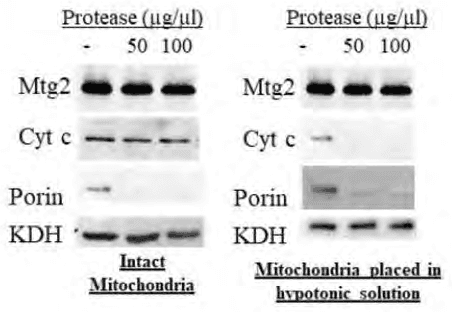
Based on the gels above, Mtg2 is localized
- 1in the outer membrane facing the cytosol.
- 2in the inter membrane space.
- 3in the matrix.
- 4traversing the inner and outer membrane.
Show answer and solution
In intact mitochondria, protease destroys outer-membrane porin but not cytochrome c or KDH. After hypotonic swelling bursts the outer membrane, cytochrome c in the intermembrane space is also cut. Mtg2 survives both treatments, like the matrix marker KDH, so it is in the matrix (or on the matrix side of the inner membrane).
A cancer cell line obtained from a rat glioma tumour was stained with the nuclear dye Hoechst 33342 and sorted using FACS. About 0.4% of the population stained lightly (LSP), distinct from the densely stained population of cells (DSP). Equal number of cells from these two populations were subcutaneously implanted into a suitable animal model to develop tumours. Following statements are made from this experiment:
- A. The LSP cells will give rise to tumours.
- B. The DSP cells will give rise to tumours.
- C. The LSP cells can give rise to LSP and DSP cells.
- D. The DSP cells can give rise to LSP and DSP cells.
Which one of the following options represents the combination of all correct statements?
- 1A and D
- 2A and C
- 3B and C
- 4B and D
Show answer and solution
The faintly stained Hoechst “side population” pumps the dye out with ABC transporters, a hallmark of cancer stem-like cells. Small numbers of these cells form tumours (A) and give rise to both side-population and main-population cells (C). Equal numbers of densely stained cells are far less tumorigenic.
Plants perceive effector molecules of a pathogen and mount a series of events that lead to the activation of a defense response. Following statements are made with respect to events that occur within a few minutes of the effector perception.
- A. Transient change in the ion permeability of the plasma membrane.
- B. Efflux of K+ and Cl− ions from the cell.
- C. Influx of Ca2+ and H+ ions into the cell.
- D. Influx of K+ and Cl− ions into the cell and efflux of Ca2+ and H+ ions from the cell.
Which one of the following options represents the combination of all correct statements?
- 1A, B and C
- 2A and D only
- 3B and C only
- 4A, B and D
Show answer and solution
Within minutes of effector recognition, the plasma membrane’s ion permeability changes (A): K+ and Cl− flow out (B), and Ca2+ and H+ flow in (C). These ion fluxes are early signals for the oxidative burst and defence gene activation. D gives the fluxes in the wrong directions.
The following statements summarize metamorphosis and regeneration.
- A. Many changes during amphibian metamorphosis are regionally specific. Although the tail epidermis never dies, the head epidermis does.
- B. In neoteny, the juvenile form is slowed down, while the gonads and germ cells mature at their normal rate.
- C. In epimorphosis, tissues never dedifferentiate into a blastema, divide, or re-differentiate into the new structure.
- D. In the regenerating salamander limb, the epidermis forms an apical ectodermal cap. The cells beneath it dedifferentiates to form a blastema.
- E. In hydras, there appear to be head activation gradients, head inhibition gradients, foot activation gradients, and foot inhibition gradients.
Which one of the following options has the correct combination of statements that will lead to normal developmental outcome in organisms?
- 1A, C and D
- 2B and D
- 3A and E
- 4B and C
Show answer and solution
B is true: in neoteny, body development slows while the gonads mature on schedule. D is true: in the salamander limb, the wound epidermis forms an apical cap and underlying cells dedifferentiate into a blastema. A is false: the tail epidermis is the part that dies at metamorphosis. C is false: epimorphosis does involve dedifferentiation and a blastema. NTA’s key gives B and D.
The lines (A to D) in the graphs represent trait relationships that capture the allocations of different tree species to their present reproduction versus present growth, and their offspring number versus offspring size.
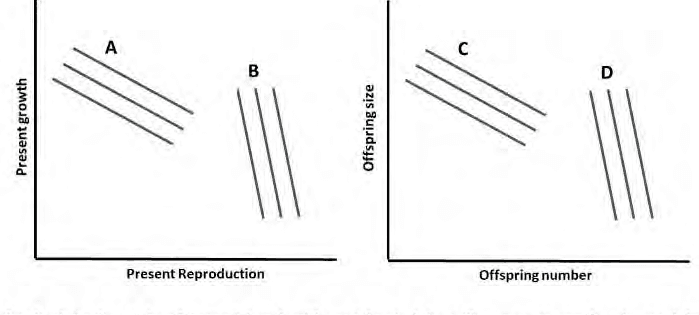
An isolated patch of forest land with nutrient-rich soils was recently cleared for timber. Which one of the options represents the correct combination of trait relationships that are most likely in the tree species that will invade and thrive in the early stages of secondary succession?
- 1A and D
- 2B and D
- 3A and C
- 4B and C
Show answer and solution
Early colonists of a cleared, nutrient-rich site put resources into reproduction now rather than growth, and into many small offspring that disperse well: r-selected traits. The steep trade-off lines at the high-reproduction and high-offspring-number end, B and D, describe such species.
In the table given below, match the national parks with the mountain range in India where they are located.
| National parks | Mountain range | ||
|---|---|---|---|
| P. | Silent Valley | i. | Western Ghats |
| Q. | Neora Valley | ii. | Eastern Himalayas |
| R. | Valley of Flowers | iii. | Western Himalayas |
| S. | Pin Valley |
Which one of the following options represents all correct combinations?
- 1P – i; Q – ii; R – iii; S – iii
- 2P – ii; Q – iii; R – i; S – ii
- 3P – ii; Q – iii; R – iii; S – i
- 4P – iii; Q – i; R – ii; S – i
Show answer and solution
Silent Valley NP is in the Western Ghats of Kerala (P–i). Neora Valley NP is in the eastern Himalaya of West Bengal (Q–ii). The Valley of Flowers (Uttarakhand) and Pin Valley (Himachal Pradesh) are both in the western Himalaya (R–iii, S–iii).
The exponential growth equation dN/dt expresses the rate of population growth as the per capita rate of increase, r times population size N. This exponential model of population growth can be modified to produce a model in which population growth is sigmoidal by adding an element that slows growth, as population size approaches carrying capacity, K. If the per capita rate of increase rmax is the maximum per capita rate of increase, then select the correct option for the logistic equation for population growth.
- 1dN/dt = rmax (K − N)/K
- 2dN/dt = rmaxN (K − N)/K
- 3dN/dt = rmax N/K
- 4dN/dt = rmax K/N
Show answer and solution
The logistic equation multiplies exponential growth (rmaxN) by the unused fraction of carrying capacity (K − N)/K: dN/dt = rmaxN(K − N)/K.
In a quadrat sample for tree species in a plantation, 20 species were found in almost equal abundance. The Shannon’s index of diversity is approximately
- 12.0
- 23.0
- 30.5
- 41.0
Show answer and solution
With S equally abundant species, Shannon’s H′ = ln S. ln 20 ≈ 3.0.
Following are certain statements regarding NADP-malic enzyme type of C4 photosynthesis:
- A. Malate synthesized from oxaloacetate in mesophyll cells is transported to bundle sheath cells.
- B. Pyruvate formed in the bundle sheath cells is transported to mesophyll cells.
- C. Aspartate synthesized from oxaloacetate in mesophyll cells is transported to the bundle sheath cells and again gets converted into oxaloacetate.
- D. Alanine aminotransferase converts pyruvate into alanine in the bundle sheath cells.
- E. Oxaloacetate is converted into aspartate, by aspartate aminotransferase in the mesophyll cell.
Which one of the following options represents the combination of all correct statements?
- 1A and B only
- 2B, C and E
- 3B and D only
- 4A, D and E
Show answer and solution
In NADP-ME C4 plants such as maize, mesophyll cells make oxaloacetate and turn it into malate, which goes to the bundle sheath (A). There it is decarboxylated, and the pyruvate returns to the mesophyll to regenerate PEP (B). Aspartate and alanine shuttles belong to the NAD-ME and PEPCK types.
The following statements are made regarding formulation of the advanced candidate antimalaria vaccine RTS,S.
- A. It contains heat-killed Plasmodium falciparum sporozoites and Hepatitis B surface antigen.
- B. It contains formalin-inactivated Plasmodium falciparum sporozoites and attenuated poliovirus.
- C. It contains a fusion protein between Plasmodium falciparum CSP C-terminal region and Hepatitis B surface antigen.
- D. It contains a fusion protein between Plasmodium falciparum Merozoite-surface protein and CSP.
Which one of the following options represents the combination of all correct statements?
- 1A, B and D
- 2B only
- 3A and D only
- 4C only
Show answer and solution
RTS,S is a recombinant particle. “R” is the central repeat region and “T” the T-cell epitopes of the P. falciparum circumsporozoite protein (C-terminal part), fused to hepatitis B surface antigen (“S”), and co-expressed with free HBsAg (the second “S”). It contains no whole parasites, poliovirus or merozoite antigen.
In hot environment, some changes occur in the human body to improve heat tolerance, which is called heat acclimatization. The following suggested statements describe the physiological adjustments during heat acclimatization:
- A. Vasoconstriction starts in skin at a lower body temperature.
- B. Salt concentration in sweat is increased.
- C. The sweat secretion over the skin is more effectively distributed for optimum use of the effective surface area for evaporative cooling.
- D. The sweat glands maintain high output for longer periods.
- E. The threshold for start of sweating is increased.
Which one of the following options represents the combination of the correct statements?
- 1A and B
- 2B and C
- 3C and D
- 4D and E
Show answer and solution
Heat acclimatisation makes sweat glands spread sweat more effectively over the skin (C) and keep up a high output for longer (D). Sweating starts at a lower body temperature (E false), aldosterone makes sweat less salty (B false), and the skin vasodilates rather than constricting (A false).
Following are a few statements made regarding the lac operon.
- A. The LacZ, LacY and LacA are encoded by a single transcript.
- B. The three proteins are translated as a single precursor and then processed.
- C. In the presence of glucose, lactose can upregulate the operon.
- D. Isopropyl thio β-D-galactoside (IPTG) is a gratuitous inducer.
Which one of the following options represents the combination of all correct statements?
- 1A, B and D
- 2A, B and C
- 3B, C and D
- 4A and D only
Show answer and solution
lacZ, lacY and lacA are transcribed as one polycistronic mRNA (A) but translated as separate proteins, not a single precursor (B false). Glucose prevents full induction through catabolite repression (C false). IPTG induces the operon without being metabolised: a gratuitous inducer (D).
In the figure below, which of the curves that relate current reproductive effort with future reproductive value are likely to favor semelparous reproduction?
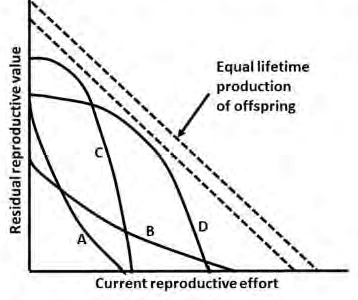
- 1Curves A and C
- 2Curves A and B
- 3Curves B and D
- 4Curves C and D
Show answer and solution
Semelparity (breeding once, all-out) is favoured when the trade-off between current effort and future reproductive value is concave-up. Then mixed strategies do worse than putting everything into one bout, so the optimum lies at an extreme. Curves A and B have this shape, while C and D (concave-down) favour iteroparity.
Certain statements are made below about hemoglobin.
- A. HbA1c has glucose attached to the terminal valine in each β chain.
- B. NADH-methemoglobin reductase system in RBC converts methemoglobin to hemoglobin.
- C. O2 binds to the Fe2+ in the heme moiety of hemoglobin to form oxyhemoglobin.
- D. The affinity of hemoglobin for O2 is much higher than that of its affinity for carbon monoxide.
Which one of the following options represents combination of all correct statements?
- 1A and B
- 2C and D
- 3A and C
- 4B and D
Show answer and solution
A is true: HbA1c carries glucose on the N-terminal valine of each β chain. C is true: O2 binds the ferrous (Fe2+) haem iron. D is false: haemoglobin binds CO about 200–250 times more strongly than O2. NTA’s key gives A and C. (B, the NADH-cytochrome b5 reductase system, is also a true statement.)
Match the major cell cycle regulatory proteins in Column (X) and their typical function in Column (Y)
| Column X | Column Y | ||
|---|---|---|---|
| A. | Wee1 | (i) | suppresses G1/S-Cdk and S-Cdk activities after DNA damage |
| B. | p27 | (ii) | phosphorylates inhibitory sites in Cdk |
| C. | p21 | (iii) | activates APC/C in late mitosis and early G1 phase |
| D. | Cdh1 | (iv) | suppresses G1/S-Cdk and S-Cdk activities in G1 phase |
Which one of the following options represents the correct match between column X and column Y?
- 1A-(ii), B-(iv), C-(i), D-(iii)
- 2A-(ii), B-(i), C-(iv), D-(iii)
- 3A-(iii), B-(iv), C-(i), D-(ii)
- 4A-(iii), B-(i), C-(iv), D-(ii)
Show answer and solution
Wee1 phosphorylates the inhibitory Tyr15 of Cdk1 (A–ii). p27 (Kip1) holds G1/S- and S-Cdks in check during G1 (B–iv). p21, induced by p53 after DNA damage, blocks them (C–i). Cdh1 activates APC/C in late mitosis and G1 (D–iii).
Given below is a PONDR (Predictor of Natural Disordered Regions) score-plot versus the protein sequence.

Based on the above figure, which one of the following statements is correct?
- 1The protein has a folded domain in the middle with N- and C-terminal Flexible tails.
- 2The protein is overall globular with almost no flexible linkers.
- 3Both the N- and C-terminal regions are unstructured.
- 4The protein contains multiple domains connected by flexible linkers.
Show answer and solution
A PONDR plot shows disorder scores above 0.5 as disordered. Here it alternates: several low-scoring, ordered stretches separated by short high-scoring, disordered stretches. That is the profile of a protein with multiple folded domains joined by flexible linkers.
The steady state level of a plant metabolite ‘M’ is determined by the complex interplay of its biosynthesis, catabolism and transport processes from the source to the sink organ. A researcher tested following molecular and genetic strategies for engineering the metabolite ‘M’ in the native host plant.
- A. Increasing catalytic efficiency of its rate-limiting biosynthetic enzyme in the source organ.
- B. Increasing catalytic efficiency of the catabolic enzymes in the source organ.
- C. Generating knock-out of the transporter protein in the source organ.
- D. Repression of the catabolic enzymes in the sink organ.
Which of the above-mentioned strategies will provide a higher accumulation of the target metabolite ‘M’ in the sink organ?
- 1A and B
- 2B and C
- 3C and D
- 4A and D
Show answer and solution
More of M reaches the sink if more is made at the source, by boosting the rate-limiting biosynthetic enzyme (A), and if less is broken down where it accumulates, by repressing catabolism in the sink (D). Speeding up catabolism at the source or knocking out the transporter would reduce the amount in the sink.
Given below is the list of F-box proteins of the SCF ubiquitin E3 ligase complex (Column X) and their associated regulatory proteins of phytohormone pathways (Column Y).
| Column X | Column Y | ||
|---|---|---|---|
| A. | TIR1 | i. | Degradation of JAZ repressor protein |
| B. | COI1 | ii. | Targets the transcription activator EIN3 for degradation |
| C. | SLY1 | iii. | Degradation of AUX/IAA repressor protein |
| D. | EBF1 | iv. | Degradation of GID1-bound DELLA repressor |
Which of the following combinations represents the correct match between Column X and Column Y?
- 1A-i, B-iii, C-ii, D-iv
- 2A-iii, B-iv, C-i, D-ii
- 3A-iv, B-i, C-ii, D-iii
- 4A-iii, B-i, C-iv, D-ii
Show answer and solution
F-box receptors: TIR1 (auxin) degrades Aux/IAA repressors (A–iii). COI1 (jasmonate) degrades JAZ repressors (B–i). SLY1 (gibberellin) degrades GID1-bound DELLAs (C–iv). EBF1/2 degrade the ethylene transcription factor EIN3 (D–ii).
A decapeptide composed of MFTGPYCPRW was dissolved in 20 mM HEPES (pH 7.0), 50 mM NaCl, 50 mM Na2SO4, 5 mM DTT, and 4 mM EDTA. Which one of the following statements about the peptide in the given buffer conditions is correct?
- 1The peptide forms a dimer through disulfide bonds.
- 2The peptide has a net positive charge.
- 3The peptide has a net negative charge.
- 4The peptide is neutral.
Show answer and solution
At pH 7 the decapeptide MFTGPYCPRW has a free N-terminal amine (+1), a free C-terminal carboxylate (−1) and one arginine (+1). No residue is acidic. Net charge = +1. DTT keeps the single cysteine reduced, so no disulfide dimer forms.
The following statements are made about the killing of virus-infected respiratory epithelial cells by cytotoxic T cells:
- A. Priming of the T cells has taken place in thymus, lymph node or spleen.
- B. Viral antigens have been presented on infected epithelial cells.
- C. MHC-I molecules have been presented on infected epithelial cells.
- D. MHC-II molecules have been presented on infected epithelial cells.
Which one of the following options represents the combination of all correct statements?
- 1B and C
- 2A and C
- 3B and D
- 4C and D
Show answer and solution
Cytotoxic T cells recognise viral peptides (B) presented on MHC class I (C), which every infected nucleated cell, including epithelium, displays. CD8 T cells are primed in lymph nodes or spleen, not the thymus (A false), and epithelial cells do not normally present on MHC II (D false).
The following tree shows phylogenetic relationships between species A to D.

Which of the following molecular mechanisms would be responsible for the phylogenetic relationships shown between species A to D?
- 1Gene duplication
- 2Horizontal gene transfer
- 3Hybridisation
- 4Genome rearrangement
Show answer and solution
The tree contains two complete, parallel copies of the A–D species tree. That pattern arises when a gene duplicated before the species diverged, so every species carries both paralogues, each inheriting the species history.
An enzyme has a Km of 1 mM. Addition of different inhibitors changes Km and/or Vmax given as Kmapp and Vmaxapp (app for apparent), respectively. Which one of the following inhibitors will result in the lowest rate of enzyme-catalyzed reaction?
- 1An inhibitor with Kmapp = 5Km
- 2An inhibitor with Vmaxapp = Vmax/5
- 3An inhibitor with Kmapp = 3Km and Vmaxapp = Vmax/2
- 4An inhibitor with Kmapp = 2Km and Vmaxapp = Vmax/3
Show answer and solution
Compare the rates at [S] = Km, where v = Vmax[S]/(Km + [S]). Option 1: 1/6 ≈ 0.17Vmax. Option 2: (1/5) × (1/2) = 0.10Vmax. Option 3: (1/2) × (1/4) ≈ 0.13. Option 4: (1/3) × (1/3) ≈ 0.11. Option 2 gives the lowest rate.
Changes in plasma osmolarity and extracellular fluid (ECF) volume affect thirst by separate pathways as given in the following statements.
- A. Hypertonicity leads to osmoreceptor activation giving rise to hypothalamic control of thirst.
- B. Hypertonicity leads to baroreceptor activation giving rise to hypothalamic control of thirst.
- C. Hypovolemia leads to activation of baroreceptor and angiotensin II giving rise to hypothalamic control of thirst.
- D. Hypovolemia leads to osmoreceptor activation giving rise to hypothalamic control of thirst.
Which one of the following options represents combination of all correct statements?
- 1A and C
- 2B and C
- 3A and D
- 4B and D
Show answer and solution
Plasma hypertonicity stimulates hypothalamic osmoreceptors, mainly in the OVLT, which trigger thirst (A). Hypovolaemia acts through baroreceptors and through angiotensin II on the subfornical organ (C). The other two pairings are reversed.
Changes in NTA’s final answer key
NTA dropped no question from this paper and accepted a single answer for every one, so each question below has exactly one correct option.
How to revise from this paper
- Attempt it in one 3-hour sittingAnswer 15 in Part A, 35 in Part B and 25 in Part C, as in the real exam, before you check any answers.
- Score it with negative markingAdd 2 or 4 marks for each correct answer and subtract 0.5 or 1 for each wrong one. That is the number to track.
- Sort your mistakes by unitUse the unit tag on each question. Two or three wrong answers in the same unit tell you where to revise first.
- Repeat with a fresh paperTake a full-length mock a week later and compare your unit-wise mistakes.
Keep going